As a creator who works with AI, I prefer to think of myself as a “content architect.” Logic is never meant to hide emotion. It is there to make emotion more persuasive when it reaches someone’s heart.
As we can see, underneath every sensory feast beats the most exacting algorithmic heart.
01. Making the rhymes fit in “hell”
In 1990, when 62-year-old Serge Gainsbourg proposed producing an album for 18-year-old Vanessa Paradis, he was already the “Satan of French pop”—soaked in alcohol and tobacco, with death not far away.
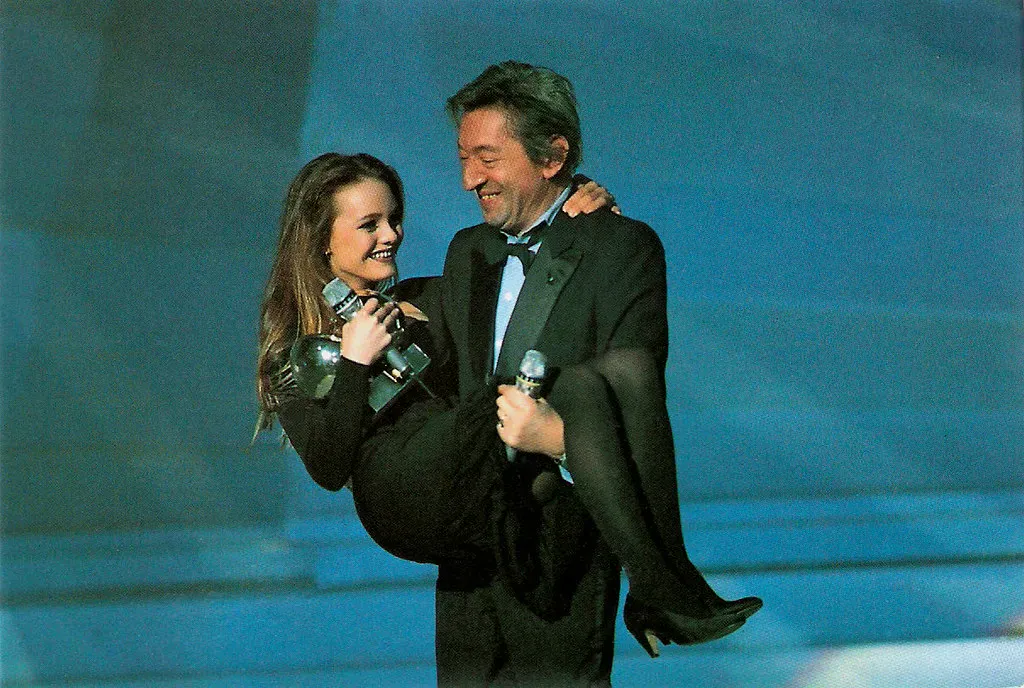
In the studio, Gainsbourg displayed an almost pathological level of strictness. He wrote more than a dozen sets of lyrics in just five days. During the time that remained, he behaved like an obsessive watchmaker, relentlessly revising the rhymes. Every syllable had to mesh perfectly, and the subtle French liaisons had to produce a sound as smooth as silk.
Paradis once broke down because she could not bear his extreme demand for logical precision. Gainsbourg, meanwhile, left us his famous double entendre: “Paradis, c’est l’enfer!”—“Paradis is hell!”
Paradis means “paradise” in French. For more about her, see my earlier article, “She Is More Than Johnny Depp’s Ex-Girlfriend”.
People tend to think art is a drunken fantasy. But to a master like Gainsbourg, extreme romance must rest on extreme, uncompromising logic. Only when every gear of metaphor fits precisely into place does the chemical reaction called beauty really happen.
02. GLM-5 and the art of “denoising” a chain of thought
Now that Zhipu has released GLM-5, most media are still repeating the usual clichés about parameters, token costs and multimodal responses. To me, the most substantial change in GLM-5 is how it reconstructs the chain of thought.
If early AI was doing probabilistic “fill-in-the-blanks,” GLM-5 is trying to build a logic with a clear skeleton. That improvement is like what Peter Jackson did when restoring Beatles recordings—the kind of “denoising” I mentioned in “When AI Enters the Hi-Fi Era”: from a sea of semantic noise, he precisely pulled out the main line of logic.

La beauté est dans la rigueur—beauty lies in rigor. When a model can handle highly complex semantic metaphors and understand what is implied rather than said, its writing is no longer a cold combination of probabilities. It begins to have a kind of intellectual aesthetic. It is no longer just answering questions; it is building a high-fidelity scene around intent.
03. Giving brands warmth through strong logic
In the deep waters of cross-border e-commerce, we often encounter a cheap imitation of “AI style”: hollow language, piled-up adjectives and no supporting logic. With the arrival of models such as GLM-5 that can reason strongly, the second half of the “democratization of aesthetics” is beginning.
Truly sophisticated branding is never about gambling on consumers’ emotions. It is based on a deep cultural logic—a symbolic logic.
Imagine a premium fragrance brand on TikTok for the Southeast Asian market. GLM-5’s insight would go beyond banal labels such as “smells good” and “long-lasting.” By connecting ideas logically, it could weave the humidity of a Bangkok evening, young people’s social anxiety and the cultural symbolism of a particular herb into an alluring story. That is the capability we at Zhishen AI are trying to build: using AI’s strong logic to reconstruct digital assets that retain warmth and texture.
04. Digital assets need an aesthetic skeleton
We are at a curious intersection: people are trying to become more emotional, while AI is trying to become more logical. But Gainsbourg already gave us the answer in that smoke-filled studio. Nothing moves us for no reason. Romance can be calculated with precision.

GLM-5 was not released to replace creators. It gives us a sharper scalpel for cutting through mediocre appearances and exposing the aesthetic skeleton underneath. In a global market full of uncertainty, I still believe in the overlooked “logic of metaphor.”
If you are also looking for the meeting point between technology and the humanities, leave a comment. In AI’s maze, we always need a little “instant wit” and a deeper conversation.