Hello, I’m Feng.
I have not posted on my public account lately. To be honest, I have been “raising a lobster” for almost a month.
I do not think OpenClaw needs much introduction by now. It is so popular that everyone seems to be talking about it.
A friend asked me: is this another scheme for taking people’s money by selling them snake oil?
I said: this may be the most spectacularly forceful technology breakout of early 2026.
If you have not realized what this “lobster” means, your understanding of AI is still stuck in the chat-box era.
Today I want to look past the red shell and talk about the logic behind the craze.

From “chatting” to “doing”: AI’s second molt
If ChatGPT in 2024 was a “know-it-all,” OpenClaw in 2026 is a “workaholic.”
We have talked before about Seedance 2.0 achieving “sensory alignment” between sound and image. OpenClaw solves the problem of putting “knowing and doing together.”
It no longer just sits behind a screen chatting with you. It gets directly involved. It can take over your browser, read local files, run code on your server and even deal with the mountain of nightmarish emails while you sleep.
Why do people call using it “raising a lobster”?
Because unlike software you install and use right away, it needs a brain—a large model—connected to it. You have to configure skills, then gradually train its working logic through conversation.
The feeling of raising and shaping it can be more psychologically rewarding than the work of tinkering with a tool itself.

Why did the lobster bring a crowd to Tencent’s Shenzhen headquarters?
Last week, nearly a thousand people queued outside Tencent’s headquarters in Shenzhen, waiting for Tencent Cloud engineers to help them install the “lobster” for free. Even a 70-year-old and a nine-year-old showed up. It sounds absurd, but the logic is solid.
People are scrambling to get this “lobster” because it hits two key pain points: a sense of ownership and a low barrier to entry.
Until now, top-tier agents have been cloud-based black boxes run by big tech companies. Other people decided how the data flowed and which permissions were granted.
OpenClaw is open source. You can raise it on your own Mac mini. In 2026, when data privacy has become extremely sensitive, the appeal of running it privately is a decisive advantage.
Shenzhen’s Longgang District and Wuxi High-Tech Zone have even introduced policies to encourage “lobster raising,” putting real money toward companies bringing it into industry. They have recognized that whoever first builds an efficient, automated “lobster fleet” will own the next generation of digital labor.
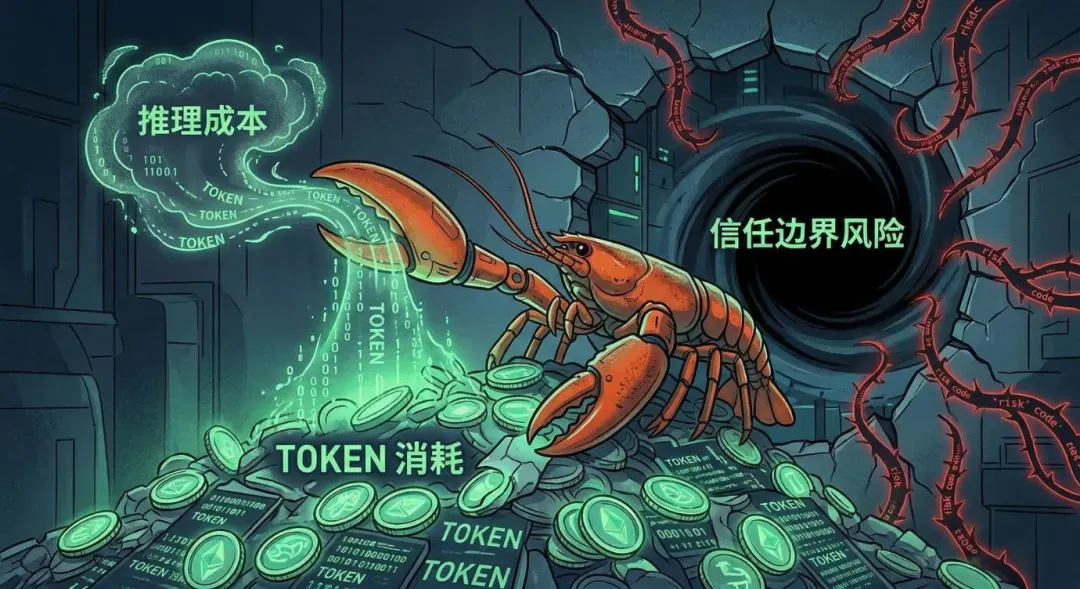
It is a “digital assistant” and a “money-burning beast”
As a content strategist who tries to stay rational, I have to pour a little cold water on this craze.
People in online groups keep lamenting: “I managed to raise the lobster, but I burned through all my token budget too.”
OpenClaw works through continuous reasoning and feedback loops. So to help you book a cheap round-trip flight to Bangkok, it may independently search, compare and make decisions hundreds of times in the background. Every action consumes expensive tokens.
Without limits, you have not raised a low-maintenance employee. You have raised an expensive cyber pet. The joke that “a white-collar worker on a 20,000-yuan monthly salary can’t afford to raise a lobster” became one of the most realistic tech jokes of early 2026.
Then there is the Ministry of Industry and Information Technology’s recent warning about trust-boundary risks. When a lobster has full read-and-write access to your computer, it is effectively opening a back door into your digital fortress while it organizes your files.
The security risks of this kind of “brute-force alignment” are a black hole we have to face amid the celebration.
In a high-fidelity world, raise a lobster you understand
I have always believed that technological progress should not only add efficiency; it should also extend personal agency.
OpenClaw is fascinating not simply because it can work, but because it lets AI escape that vague cloud-bound feeling for the first time. It becomes a real partner that can sense its physical environment through connected hardware and make decisions for you.
As I wrote in “When AI Enters the Hi-Fi Era”, what we are seeking is that sense of “breathing.” Raising an OpenClaw is really an attempt to train cold algorithms into a digital counterpart shaped by your own way of thinking.
If you have not adopted your own “lobster,” I suggest you not rush in.
First think through your business logic: where should AI execute aggressively, and where do you need to step in and handle things yourself?
Before raising a lobster that understands you, you need a lobster you understand.
In this era of “raising lobsters,” the most valuable things are not computing power, but your ability to break down complex tasks and your judgment about the boundaries of safety.

If your thinking about AI has moved beyond brute-force execution and you are starting to explore how to build it into enterprise strategy—or if you simply want to improve your own skills—we invite you to join our AI Strategy Circle and talk it through.
We do not talk about code. We talk about turning AI into a practical operating system, not an expensive cyber pet.
I write about AI, culture, going global and everything else that catches my interest. If you enjoyed this, please like, share and save. Thanks for reading. See you next time!