A Bunch of French People Were Just Fighting Here!
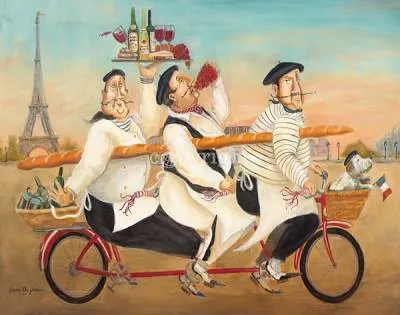
I saw this picture in my feed today and laughed until I was wiping my eyes:

When it comes to street fights, China’s two most popular weapons are surely the folding stool and the brick. They are way ahead in user numbers. The third most fearsome weapon might be the thick, hard, yellow baguette—at least in the West, it has often served as a weapon in duels.


The baguette is a relative newcomer to the world of weapons, and its history is not that long. On the morning of September 13, 2015, Chief Zhang made coffee, opened his computer, and found that the Google Doodle was celebrating “the 22nd anniversary of official recognition of the baguette by France”.

What? Just 22 years? Aren’t baguettes everywhere in films set during the First or Second World War? What does “officially recognized” mean? Were all baguettes illegal before that?
So the well-read, inquisitive, thoughtful, discerning, and diligent Chief Zhang went over the wall to consult the French Wikipedia… One legend credits the baguette to a cook in Napoleon’s army, who invented the long loaf because soldiers could carry it easily on the march. The more historically grounded account is that the baguette evolved from Viennese baking techniques in the mid-nineteenth century.
What really helped the baguette spread was a law passed in 1920: bakers were not allowed to start work before 4 a.m. (The rule seems odd, but at least it guaranteed fresh bread every day. What a country that knows how to eat!) The problem was that bakers no longer had enough time to make traditional round loaves. Then the baguette came to the rescue: it took less time to prepare and bake, and quickly took over the French table.
The French kept eating baguettes for a few more decades. In 1993, the government issued the “Bread Decree” (Décret pain), revising and clarifying the bread-related provisions of a 1905 food safety law. It defined “traditional French bread” and strictly regulated how it was made and what proportions of ingredients its dough could contain.
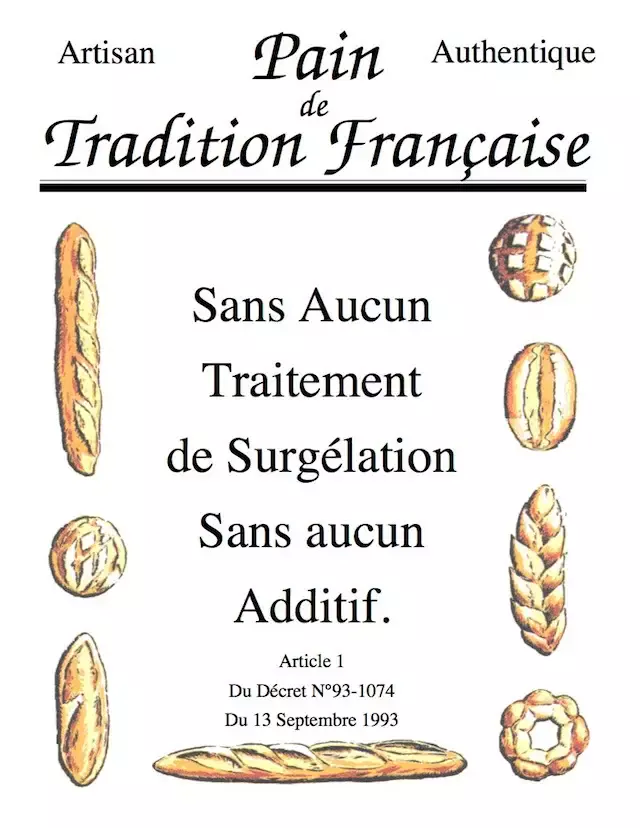 Traditional French bread guaranteed: never frozen, with no additives
Today, the baguette is an essential companion at home and on the road, woven into every part of French life.








France now has a population of more than 60 million and eats over 30 million baguettes a day… Being a baker there is hard work, and you cannot just take time off whenever you like. Since the French Revolution began in 1789, the government had required bakers to notify local authorities before taking a holiday, to prevent shortages if bakers took time off together. That law remained in force until it was formally repealed last year.
So when will we get a “Rice Law” or a “Steamed Bun Law”?
And finally, here is a little bonus: