Leonard Cohen’s Last Letter Was to His Muse
First published on the WeChat account A Certain Movie (ID: cinematik).
One afternoon in March 1960, a 25-year-old Canadian poet named Leonard Cohen left a dentist’s office on London’s Bank Street after having a wisdom tooth pulled. He was heading back to his cold, damp lodging.
Another heavy rain seemed imminent, as was so often the case in London. Cohen hurried into a Greek bank nearby. One of the tellers wore sunglasses and had a deep tan, completely out of place in the gray surroundings. They got talking, and Cohen learned that the man had just returned from Greece. Cohen asked what the weather was like there. “Spring,” the man said, and went on to describe Greece’s sunlit beaches…
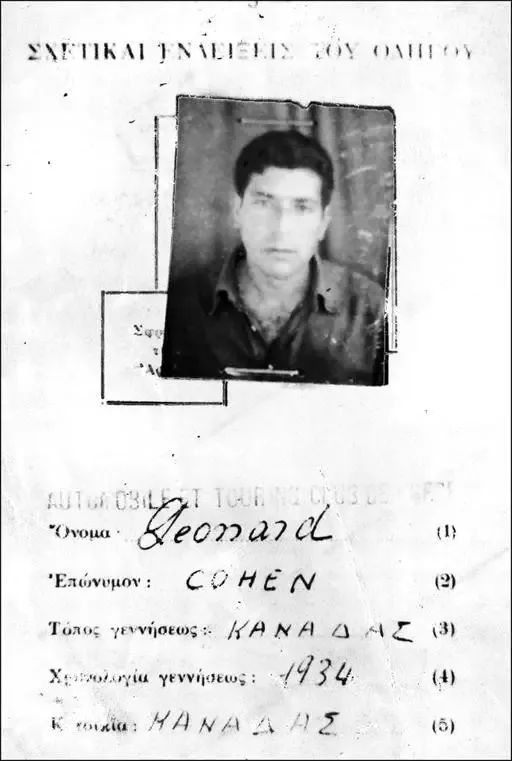
Cohen’s “temporary residence permit” on Hydra Island.
On April 13, Cohen flew to Athens. The next day, after a five-hour boat ride, he arrived on Hydra, an island in the Aegean Sea. He was immediately captivated by the place. A community of bohemian expatriates lived there, and everyone spoke English. Australian writers the Johnstons warmly invited Cohen to stay in a spare room in their home.
The island had electricity for only one hour each evening. There were no phones or cars, and people rode donkeys up and down the hills. But Cohen saw the Johnston couple’s life as the one he wanted: writing novels on a warm Greek island.
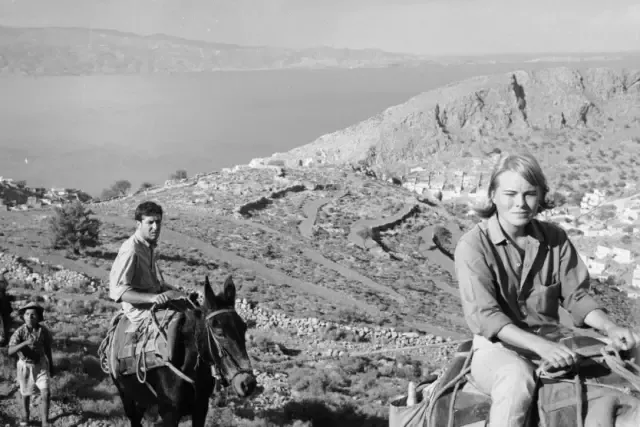
Cohen and Marianne riding donkeys.
Johnston also introduced Cohen to Marianne Ihlen, a writer from Norway. Marianne and her Norwegian novelist husband, Axel Jensen, had moved to the island a few years earlier. But when their child was six months old, Jensen had an affair and left Marianne and the baby.
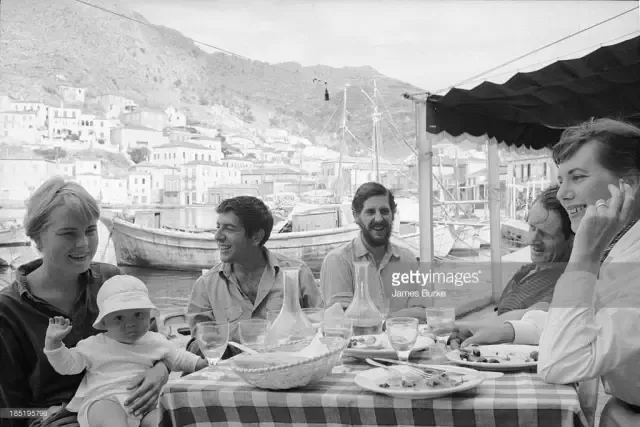
Marianne and her son with Cohen and their friends.
At noon, they would sit by the harbor at the Katsikas brothers’ grocery shop, waiting for the ferry from the mainland to see whether it brought letters or new artists and writers. In the evenings, they sat under the old pine tree at the Dusko family’s house, talking about philosophy, politics, and religion, drinking, and singing. Spending every hour together, Cohen and Marianne soon fell in love.
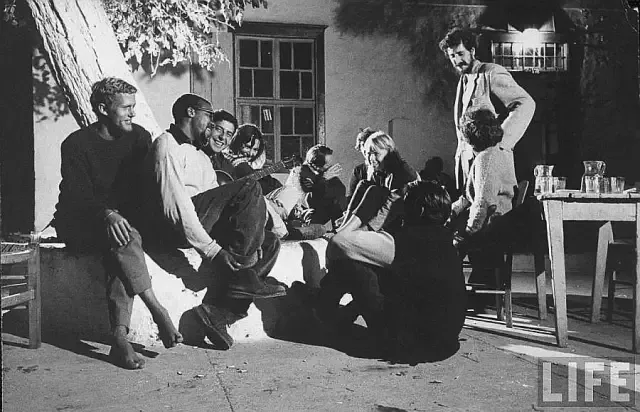
Cohen, Marianne, and friends beneath the old pine tree at the Dusko family’s house.
On September 27, just days after turning 26, Leonard Cohen bought a house on Hydra for $1,500, using money he had inherited from his grandmother.
As a friend put it, this was a “big deal”: it meant Cohen was settling down in this mysterious place, in an unknown world. Cohen later said it was the wisest decision he had ever made.
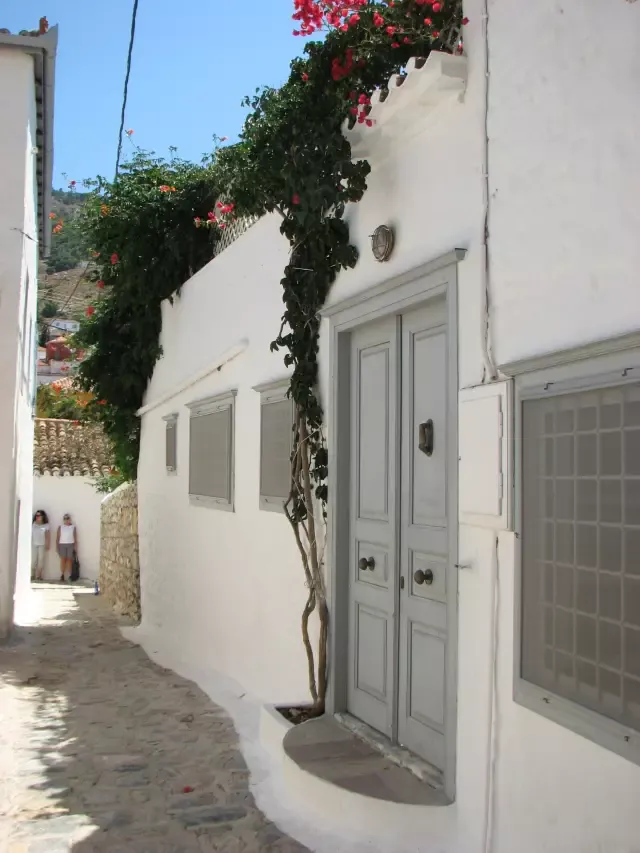
A recent photograph of Cohen’s house.
The three-story house had five rooms. Its whitewashed walls had yellowed; it had neither electricity nor running water. But it was enough for Cohen and Marianne to live together, and for him to have a private space to write. In a letter to his mother, Cohen wrote with deep affection:
“The house has a great terrace, with a magnificent view of the mountains and many white houses sparkling in the distance. The rooms are spacious and cool, with French windows and thick walls. I think the house is very old, perhaps more than 200 years. I often imagine that generations of seafaring families lived here. It needs some work, but if I start now, in a few years it could become a villa. I live high on the mountain, in a way of life that has gone on for hundreds of years. All day I hear the vendors passing below; their voices are as lovely as music. I get up at seven every morning and work until noon. The cool mornings are best for work, though I also love the hot wind—especially when I remember that it is only a ten-minute walk from my door to the Aegean Sea.”
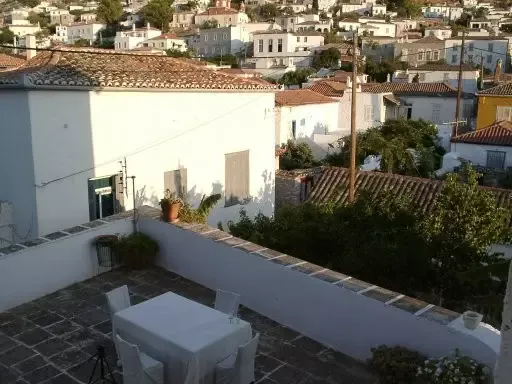
The terrace of the house.
Life in the house swung between extreme discipline and extreme indulgence. Cohen could fast for days to focus, or drink and take drugs every day. By daylight he might write novels and poems shirtless in the sun, squinting at his typewriter; at night he might surrender to sensual pleasures.
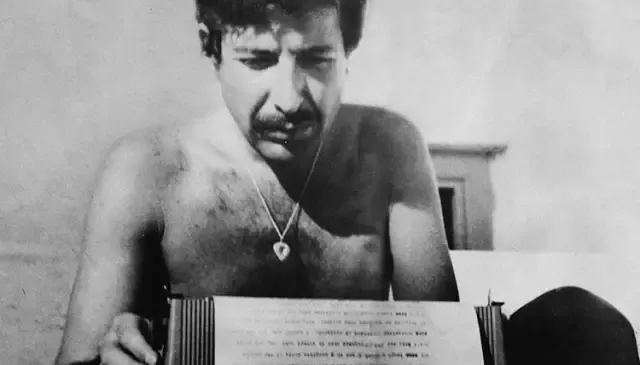
Cohen at work.
Cohen called Marianne his muse.
During the years they lived together on the island, Cohen wrote two novels, The Favourite Game and Beautiful Losers, and the poetry collection Flowers for Hitler. He also began writing songs and made his first two albums, Songs of Leonard Cohen and Songs from a Room.
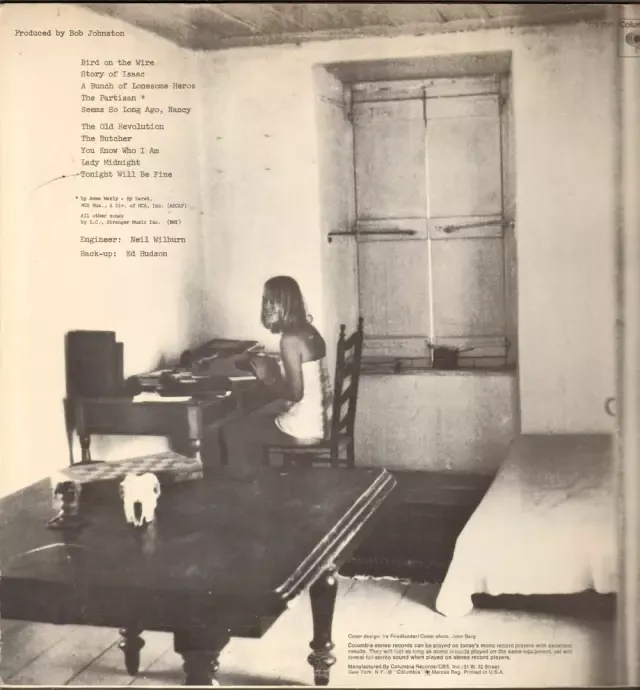
The back cover of Songs from a Room. Marianne sits at the desk.
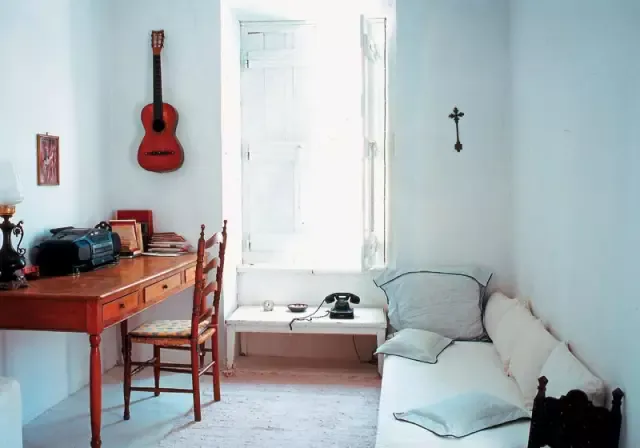
The house as it looks today.
“Bird on the Wire,” for example, was inspired by the utility poles that later appeared on the island. One day Marianne saw a bird perched on a wire outside their window. It looked like a note on a music staff, she told Cohen, so why not write a song about a bird on a wire? That became one of Cohen’s early classics. Marianne always felt that it was her song too.
As Cohen’s work grew more famous, he traveled more and more. Sometimes there was only enough money for one of them to go. Marianne had to stay behind on the island alone. Those waves of loneliness kept returning. Marianne later said she had wanted to lock Cohen in the house and swallow the key.
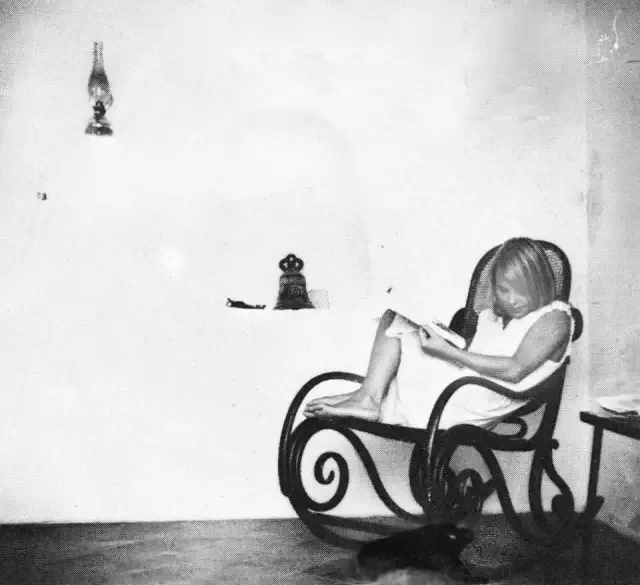
Marianne.
The distance between them kept growing until they finally separated. In the 1970s, Marianne returned to Oslo and married again.
“I was lucky to meet Leonard at that point in my life,” Marianne said. Before they had truly parted, she had already heard Cohen sing “So Long, Marianne.” “He taught me so much. I hope I inspired a line or two of his lyrics.”
After leaving Greece, Cohen never wrote another novel.
Watch Cohen return to Hydra in 1988
Cohen returned to Hydra in 1988.
This July, Marianne was in the final stages of cancer in Oslo, Norway. Her friend Morsæd contacted Cohen in California to tell him Marianne might not have long to live. Two hours later, Cohen wrote this beautiful farewell letter to his muse:
“Well, Marianne, it’s come to this. We really are so old, and our bodies are falling apart. I think I will follow you very soon. I’m right behind you. If you stretch out your hand, I think you can reach mine. You know I have always loved your beauty and your wisdom. I don’t need to say more, because you know that. Now, I only want to wish you a very good journey. Goodbye, old friend. Endless love. See you down the road.”
Morsæd read the letter to Marianne, who was still fully conscious. When she heard the words “if you stretch out your hand,” she stretched out both hands.
Two days later, she lost consciousness and passed away.
Morsæd wrote back to Cohen:
“As she was dying, I hummed ‘Bird on the Wire’ to her, because it was the song she knew best. Then I kissed her forehead, left the room, and said, ‘So long, Marianne.’”
And, just as he had predicted, Cohen followed Marianne on November 7.
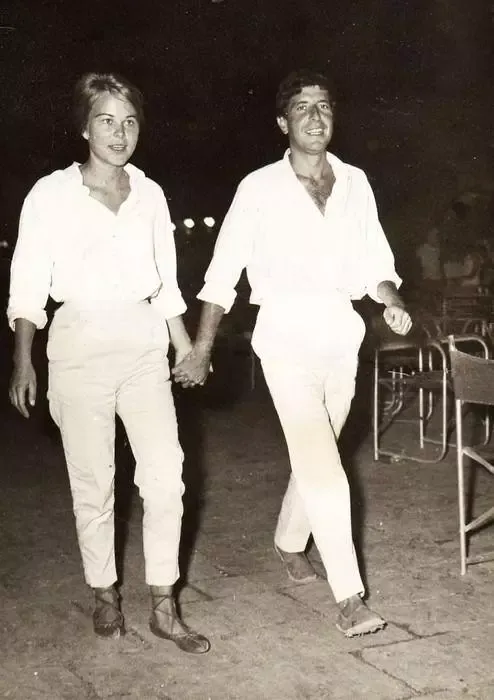
I used to think I was some kind of gypsy boy / Until I let you take me home
You know how I love to live with you / But you make me forget so much
I forget to pray for the angels / And then the angels forget to pray for us…
We met when we were almost young / Deep in the green lilac park
You held on to me as if I were a crucifix / We knelt through the long dark hours…
Now I need your hidden love so much / I am as cold as a brand-new razor…
So long, Marianne / It’s time that we began
To laugh and cry and cry and laugh about it all again…
— “So Long, Marianne”
