Since AI took off, more and more courses like this have appeared: a few thousand yuan for two days, teaching bosses or CEOs how to use AI, build agents and bring their companies up to speed.
I do not think these courses are scams. The instructors mostly know their subject, and the material is decent.
But failing to put what you learn into practice afterward has become the norm.
In my previous piece, I said there are two kinds of AI users: people who act like bosses and people who act like operators. Having said that, I need to clarify something: does being an operator put you a level below a boss? Are bosses naturally better at using AI?
Not necessarily. The reverse is more often true.
To be the boss of AI, you have to be able to say what you want
Whether someone can be the boss of AI has nothing to do with their position in the company. It depends on one thing: can they say what they want?
And being able to say what you want depends on being there on the ground.
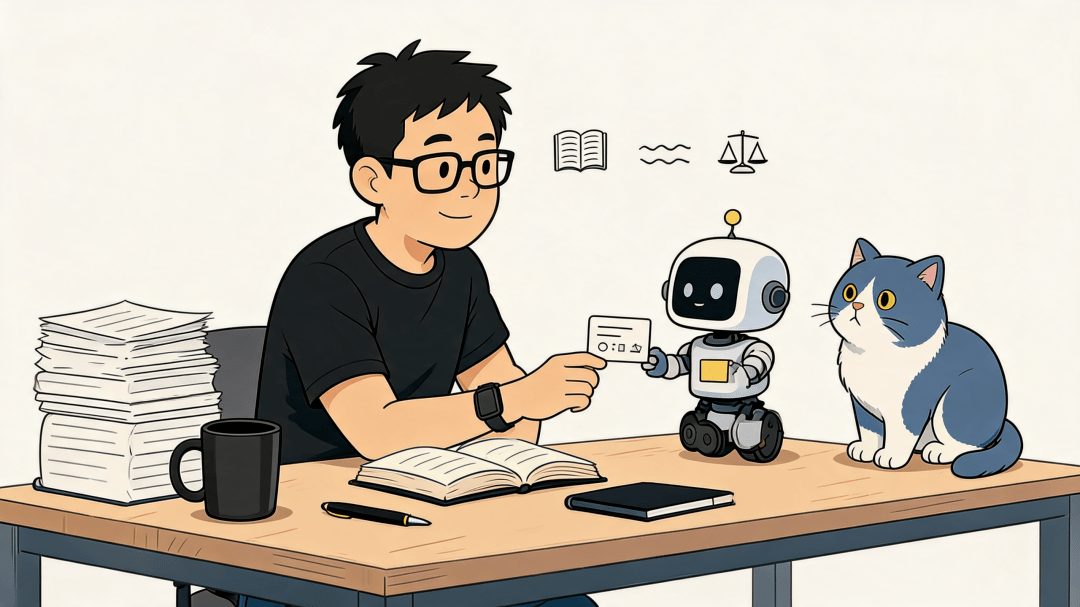
I can set rules for AI in translation not because I am clever, but because I have worked through those manuscripts sentence by sentence for twenty years. Which terms cannot be translated a certain way in this industry, which sentence the client objected to last time, whether readers will drift away by the third paragraph—none of that was written in a book. I learned it on the job.
A boss who wants to be the boss of AI needs the same kind of knowledge: where customers tend to hesitate, which line on the quotation is easiest to fill in incorrectly, which three questions salespeople get over and over, and why the order lost last month for reasons different from what was said at the review meeting.
Many bosses do not know how to use AI, not because they cannot learn.
They have no real use case in hand.
You open the chat box, and the first question is: what should I ask it to do?
The course makes sense. It is not hard to explain which tasks AI can handle now, which it cannot, and how to break a task into steps it can manage. The boss really does want to put it to use.
Then they get back to the office, open the chat box, and the question emerges: what should I ask it to do?
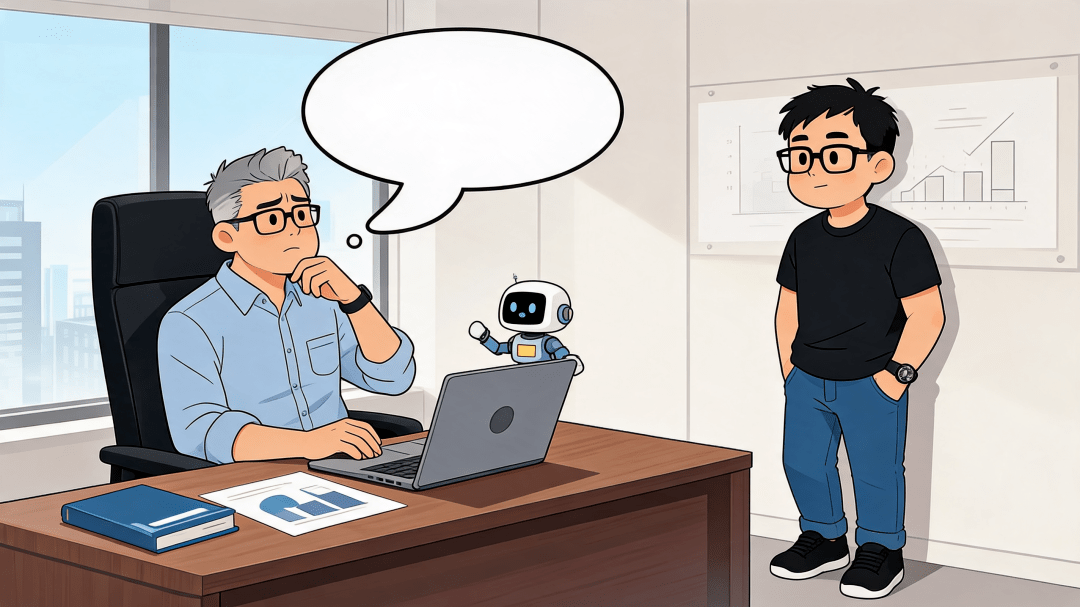
The only tasks they can think of are their own: write my annual summary, turn this quarter’s data into a slide deck, check this contract for hidden risks. AI does those jobs reasonably well.
But the work in a boss’s hands is exactly the kind AI has the hardest time taking over. What they really do all day is judge and decide: should we take this customer, should we keep this person, can we lower this price? Those decisions cost mental energy, not time, and none can be outsourced.
After trying it twice, it feels all right, I guess.
The chat stays open for a while, then gets closed.
The work happening out of sight
The tasks where AI could make the biggest difference are not in the boss’s hands.
There is the customer-service agent who manually sorts more than thirty inquiries every week. She can tell at a glance which people are ready to buy, which are comparing prices, and which are competitors probing the market—but she has never written down what that glance is based on. There is the account coordinator who has revised the same product description twelve times, one version for Japanese customers and another for the Middle East, with the right nuance for each version living in her head. And there is the person handling quotes who spends half an hour digging through old files every time an inquiry comes in, because three years of company quotations are scattered across four computers.
All three of them have real-world cases in their hands.
The boss knows this work exists. What they do not know are the details: how those thirty inquiries are sorted, what differs between the twelve versions, what exactly takes half an hour to find.
And AI depends on details to take over.
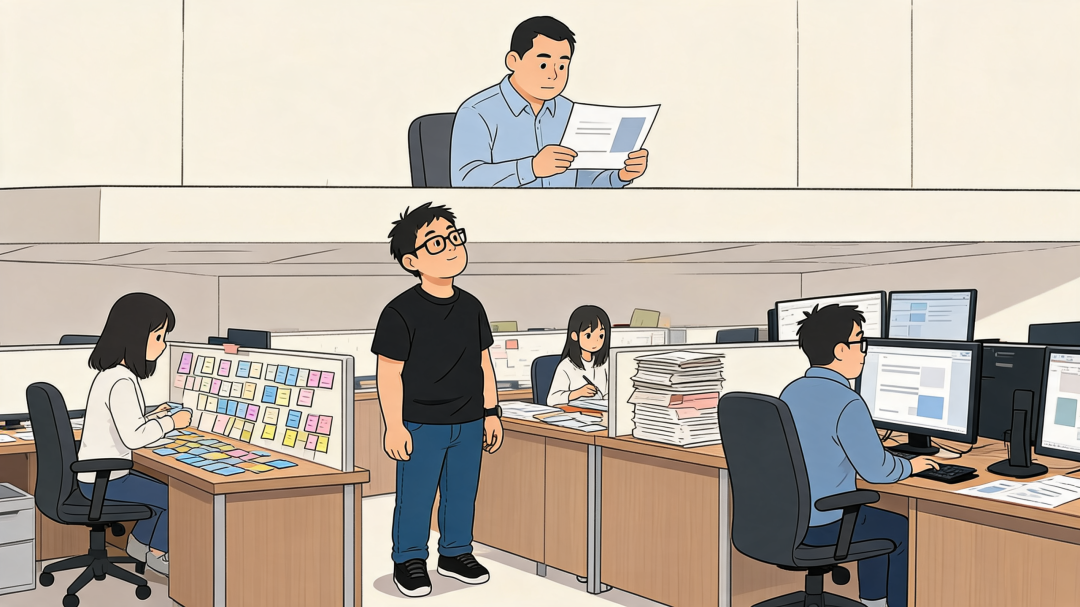
The boss has been away from the front line too long. So long that they can only see an outline of what really happens every day through reports and weekly meetings. An outline can be managed, but it cannot be used to instruct AI. Put someone who sees only the outline in front of AI, and all they can say is, “Help us improve efficiency.”
Do not spend those two days in a classroom
So my advice is a little blunt: save the few thousand yuan for now and spend two days back on the front line instead.
Do not make inspection rounds or sit through reports. Sit next to customer service and read every inquiry she has received over the past two days. Go out with a salesperson to meet two customers and hear what they ask. Pull up last month’s lost deals and look at the reasons yourself.
Those two days cost nothing, but they give you something the course cannot.
You will remember what you want. Once you know what you want, the answer to what AI should do will start to emerge on its own.
Then you will hit the genuinely difficult layer. The things you want to change are probably not on your own calendar. They are in other people’s ways of working: how customer service sorts inquiries, how sales puts together quotations, whether the veteran employee who has built up eight years of judgment is willing to write it down and hand it to the company.
No one can make those changes for you.
In the end
I do not think those courses are a waste of money. Learning in two days what AI can and cannot do right now is worth the price.
But knowledge does not turn itself into productivity. The stretch of road between the two belongs to your company.
When AI fails to take hold in a company, it is rarely because nobody understands it.
It is because the people who know what AI should be doing do not get to decide.
And the person who does get to decide has not been out on the ground for a long time.
One more thing
Since the start of this year, Beto and I at Zhishen AI have taken on several projects. We use AI to assist with most of the work, and we also help clients train their own teams to use AI. After six months of doing this, we have encountered everything described above in the field.
The hardest layer has nothing to do with technology.