Draco Malfoy: the Year of the Horse’s confirmed mascot? Rowling’s hidden roast is impossible to miss 😂
I came across a hilarious story today: Draco Malfoy, the smug guy from Harry Potter!

But honestly, J.K. Rowling buried a joke in his name long ago. She is probably laughing to herself that we only noticed now.
Because Malfoy does not have a nice meaning at all!
It sounds like the French phrase mal foi, which basically means “bad faith”—someone who cannot be trusted and is full of nasty schemes!
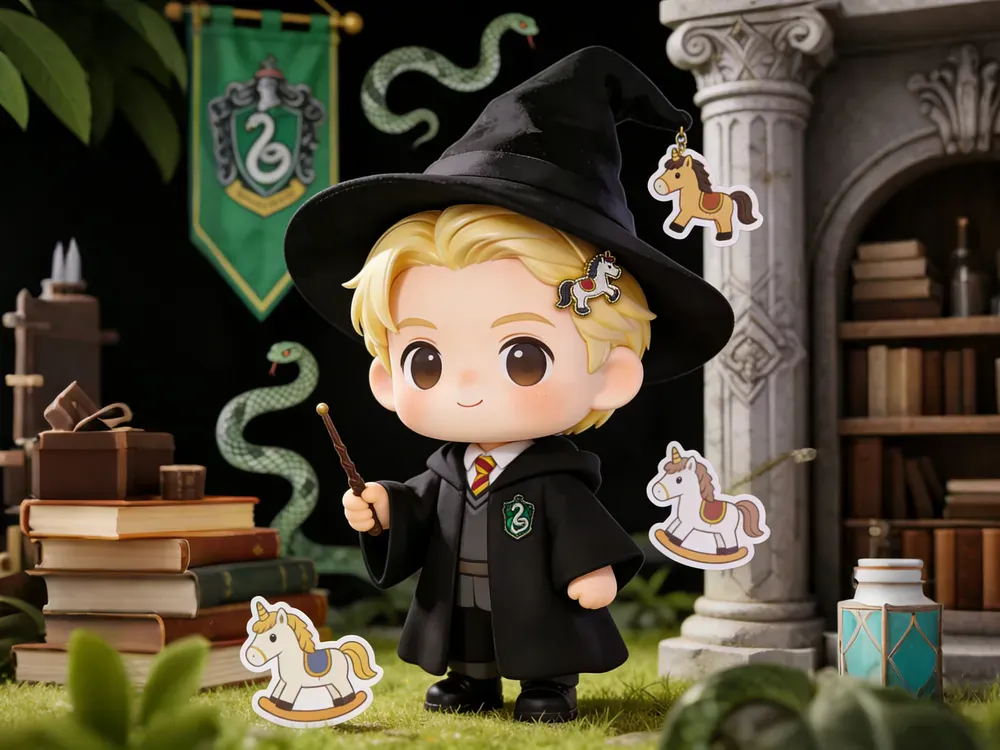
Draco means “dragon” in Latin. It suits Slytherin’s serpent emblem and matches his arrogant, prickly attitude perfectly. Draco is also a bloodthirsty dragon in Greek mythology, a sly hint at the cruelty in his bones and the dark family traits embedded in his DNA. Rowling’s wordplay is seriously impressive!
And Malfoy is not the only one. Every character in Harry Potter, no matter which side they are on, has Rowling’s little ideas tucked into their name. Each one is a trove of hidden clues. Let’s dig through them one by one and see what other secrets those names hold!
Voldemort: a user manual for ambition, with no subtlety
Break down Voldemort, and it is supposedly a combination of Latin volare (“to fly”) and mort (“death”), literally “to fly away from death.” That hits his lifelong obsession exactly: he chases immortality and does everything he can to avoid death. Even his name is shouting, “I want to live forever!” There is no hiding it. It is wonderfully blunt.
And there is an incredible little detail: his original name, Tom Marvolo Riddle, can be rearranged to spell “I am Lord Voldemort”! Rowling’s wordplay is so good. From the moment he was born, his name spoiled the story: this child has ambition in his DNA and is bound for the dark side. No doubt about it 😭
The central trio: names with a “chosen-one formula,” each with a little Easter egg
Harry Potter: an ordinary Muggle, but secretly the chosen hero
Harry comes from the Germanic word heri, meaning “army leader” or “strong one.” From the very beginning, his name hints that he will become the central figure in the fight against Voldemort. Potter means a maker of pottery, which brings a nice contrast: clay looks ordinary, but it can be shaped into many different things. Harry grows up in a Muggle family and seems like an ordinary boy, but after one challenge after another, he becomes the hero who saves the wizarding world. That resilience was tucked into his surname all along!
Hermione Granger: the ultimate bookworm, with a built-in wisdom boost
The name Hermione is a direct nod to Hermes, the Greek god of wisdom, giving her a natural “top student aura” that fits her perfect memory, calm under pressure and ability to win every argument. The surname Granger means “farmer,” fitting her low-key Muggle background while hinting at her strength: like a hardworking farmer, she “cultivates” knowledge and uses her own effort to change the wizarding world’s rules. She even fights hard for the rights of house-elves. So cool!
Ron Weasley: seemingly clumsy, secretly brave
Ron is short for Ronald, which comes from the Germanic elements ragin (“counsel”) and wald (“power”), meaning “wise ruler.” That fits him: he seems carefree and a little clumsy, but he always charges ahead at crucial moments. He dares to take on giant spiders in the Chamber of Secrets and stays by Harry through Deathly Hallows. A true hidden hero!
And Weasley sounds a lot like weasel. Rowling uses the little sound-alike joke to match the lively, clever, full-of-life Weasley family. Weasels may be small, but they always seem to find a way through. The name fits more and more the longer you think about it.
The hidden heavyweights: the codes of good and evil in their names
Albus Dumbledore: guardian of the light—wait, a bumblebee?
Albus means “white” in Latin, symbolizing purity and justice. He is the wizarding world’s beloved white light, a perfect fit for Dumbledore. Dumbledore means “bumblebee” in Old English. Rowling herself joked: “I imagine him being like a bee, always busy, buzzing around Hogwarts. He’s gentle but also has authority.” The seemingly contradictory combination is exactly Dumbledore: dignified yet kind, spending his whole life busy protecting the wizarding world. It is funny and heartbreaking at once!
Severus Snape: a cutting, arrogant man hiding the deepest tenderness
Severus comes from the Latin severus, meaning “strict” or “stern.” It is practically Snape’s personal label: cold, taciturn and sharp-tongued, always giving Harry a hard time in class. Anyone watching wants to ask, “Why are you so full of yourself?” His surname Snape sounds like snake, linking him to Slytherin and hinting at a hidden, mysterious double life. Only at the end do we understand that all his “cruelty” was a performance, concealing an overwhelming love. The contradictions in his name had spoiled his character all along 😭
Rowling’s naming philosophy: a name is a character’s invisible profile
J.K. Rowling once said: “Naming characters is one of the most fun parts of writing. Every name contains a piece of their fate.” After digging through these names, I can see she really put that idea into practice. She drew inspiration from Latin, French, Greek mythology and Old English, turning every name into an invisible profile full of clues. The pattern is:
- Heroic characters have names meaning “light,” “strength” or “wisdom” (such as Albus and Harry) and feel warm right away.
- Villains have roots meaning “darkness,” “death” or “deception” (such as Voldemort and Malfoy) and carry an evil aura without any setup.
- Complex characters such as Snape have contradictions built into their names, quietly telling us there is more to them than meets the eye.
These names are never just labels. They are little Easter eggs Rowling tucked into the books, with each character’s fate hidden in their name from the start.
If you reread Harry Potter now and see those familiar names, do they suddenly give you a new perspective?