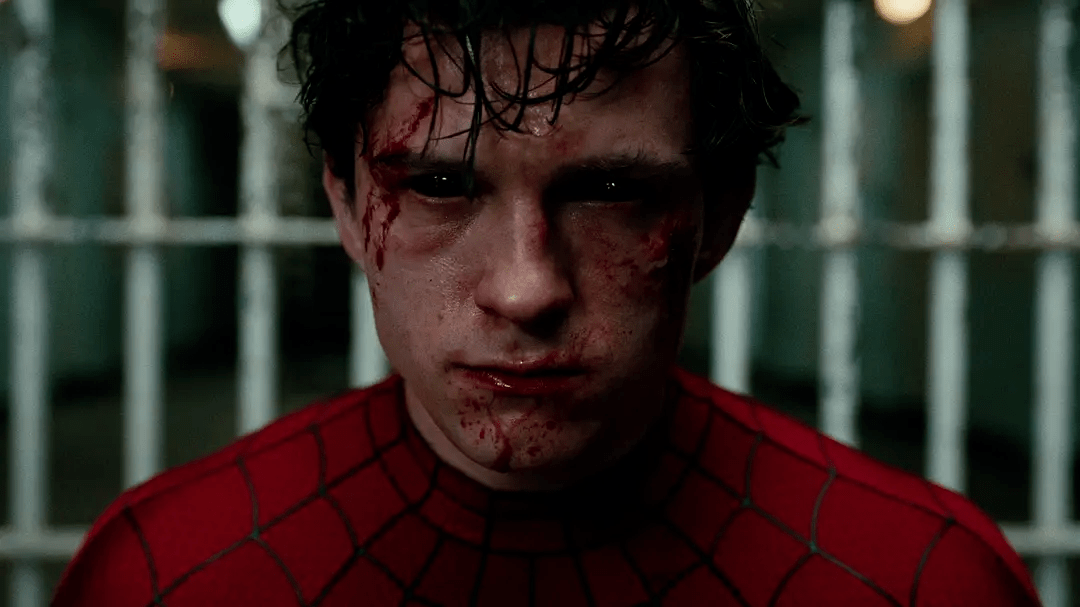
Over the weekend, Spider-Man: Brand New Day opened with about $927 million at the global box office. The United States and Canada contributed $355 million, and mainland China $121 million. In nominal box-office terms, without adjusting for inflation, it was the second-biggest global opening in film history, behind only Avengers: Endgame.
The number came at an awkward time.
Over the past few years, major releases such as The Flash and The Marvels have suffered box-office or critical setbacks. “Superhero fatigue” has shifted from an industry theory into something like received wisdom that hardly needs defending. The media have discussed endlessly whether the genre has reached the end of the road, with familiar explanations: audiences are tired of it, there are too many heroes, the cinematic universes have become too confusing.
Then, over that very same weekend, tens of millions of people around the world went back to cinemas to watch a young man in a red-and-blue suit swinging between New York’s buildings.
If audiences are really tired of it, who were all those people?
“Fatigue” is a very useful word
The phrase “superhero fatigue” caught on in the industry because it is so useful.
When a film costing hundreds of millions of dollars fails, the reasons are usually complicated: repeated script revisions, a bad release date, management changes, actor contracts, reshoots and recuts, unfocused marketing, or a cinematic universe that has grown so large ordinary viewers do not know where to enter.
Sorting through all that takes work and can upset people. “The audience got tired of it” is much cleaner. The blame is spread across hundreds of millions of strangers, and nobody has to sign their name.
But can audiences really lose interest in an entire genre forever?
Westerns have been declared dead. So have gangster films. Horror has died several times, only to come back in some unexpected movie. What people usually grow tired of is not the genre itself, but repetition: every few months, the sky splits open again and a group of people with different powers fight one last battle in front of a green screen.
There is a more troubling problem, too: these heroes have become less and less like people who could live in your building.
The films worry about whether the universe will be destroyed, but not so much about why someone does not want to get out of bed in the morning. Characters can travel across multiple universes, but cannot resolve a relationship that has gone wrong. Death can be undone with time travel, parallel worlds and plans for the next phase, so even a supposedly world-ending crisis carries less and less weight.
The bigger the world gets, the smaller a person can feel.
He came out of a magazine that had no next issue
Spider-Man has survived one genre cycle after another for reasons that have little to do with shooting webs.
In 1962, Stan Lee and Steve Ditko created a superhero whose main character was a high-school student. According to the version Stan Lee told many times later, publisher Martin Goodman was not keen on the idea: teenagers were usually sidekicks, and people hated spiders.
Spider-Man was eventually given his first appearance in issue 15 of Amazing Fantasy. In fact, this also turned out to be the magazine’s final issue.
But the story is not quite as neat as it is often retold. Comics historians found an editorial page in that issue announcing that Spider-Man would return in Amazing Fantasy. That has kept open a debate about whether the publisher decided to end the magazine before Spider-Man appeared or canceled it later.
So the more accurate version is not that an unwanted character was tossed into a magazine that was about to fold. It is that a character the publisher thought would be hard to sell appeared in a magazine that ultimately had no next issue.
What is certain is that the issue sold exceptionally well. The publisher then launched a standalone title, and the first issue of The Amazing Spider-Man appeared in 1963. A character nobody initially believed in went on to become one of Marvel’s most important and commercially valuable characters over the next sixty years.
He was also short on money. That stood out especially at the time.
Bruce Wayne was wealthy, Reed Richards had extraordinary scientific gifts, and Clark Kent at least had a steady job. Peter Parker had to make a living by taking photographs of Spider-Man and selling them to the Daily Bugle. J. Jonah Jameson, who bought the pictures, drove the price down while using the newspaper to denounce Spider-Man as a menace to the city.
He worked at a place whose business was attacking him.
There was another important detail in Steve Ditko’s design for Spider-Man’s costume: the mask covered his entire face, leaving no skin exposed. Ditko later explained that it hid Peter’s obvious teenage face and added mystery, giving readers a chance to project their own expressions and personalities behind the mask.
Perhaps that is where Spider-Man’s ability to resonate across ages and identities began.
If nobody remembers you, do you keep going?
Brand New Day picks up the cost left behind by No Way Home: the world no longer remembers Peter Parker.
He lives alone in New York and fights crime full-time as Spider-Man. His old friends have moved on, while he has become someone erased from shared memory. Sony’s official story description sums up his situation in one sentence: the world may have forgotten Peter Parker, but he has not forgotten them.
What really stops him this time is much more ordinary than a stronger villain: if nobody remembers you, if no one knows what you have done for them, do you keep going?
That question is not only for superheroes.
A 2025 report from the World Health Organization’s Commission on Social Connection estimated that about one person in six worldwide experiences loneliness. Among adolescents, the figure was around 21%, higher than in other age groups. Put another way, about one in five adolescents feels lonely.
An abstract statistic is one thing. What it feels like in a person’s life is another.
It might be a young person who sits through ten meetings a day and has two thousand contacts in their phone. They get home from work wanting to talk to someone, but cannot think of a single name. There is never a shortage of people on their phone. What is missing is someone who knows they are having a hard day.
Social media constantly reminds us that other people are at parties, traveling, falling in love and succeeding. Algorithms can supply an unlimited feeling of company, but they cannot yet replace being remembered by a particular person.
Seen this way, the box-office success of Brand New Day is not so mysterious. The film does not simply give audiences a stronger hero. It has found again the least invulnerable part of him.
Peter Parker saves a city, but nobody knows who he is. For someone whose every move is recorded in data yet who sometimes wonders whether they have truly been here at all, that feels much closer than another universe being destroyed.
Keep the spectacle. Do not skip the cost.
Realism does not mean superhero films must give up special effects and become documentaries.
People do not pay to go to a cinema so they can relive the office, the bills and the morning rush. The value of a superhero film is precisely that it offers powers, speed and victories that ordinary life cannot provide.
But effective fantasy uses exaggeration to explain reality in a new way.
Superman matters not only because he can fly, but because someone with absolute power still chooses restraint. Batman can be remade again and again not only because Gotham has a high crime rate, but because he has turned trauma into an obsession, and obsession can create new harm of its own. Spider-Man’s story works because it keeps returning to the same question: once a person has more power, do they have to sacrifice more of their own life?
When those questions disappear and all that remains is a roster of characters, pieces of world-building and Easter eggs, a hero becomes a brand asset. The audience is no longer watching a person make choices. They are following a product manual whose page count keeps growing.
Realism has nothing to do with the quantity of special effects. The question is whether anyone still pays a price after the effects are over. A crisis looking bigger is not enough; the character must lose something that cannot easily be brought back.
For more than a decade, superhero movies have kept raising the stakes: from a city to the whole planet, from a war in space to the multiverse. It is as if the story must keep expanding to prove that the next film is more worth watching than the last.
The problem is that scale loses value easily.
After seeing the world end ten times, the eleventh is unlikely to make anyone more anxious. By contrast, an unsent letter, a goodbye that was never spoken, or someone who chooses to help even though they know no one will thank them can carry a more tangible weight.
The heroes worth watching have never been the ones who always know the right answer. They have to choose when there is no answer, then bear the consequences themselves.
Back down from the sky to the ground
Brand New Day is still a massive commercial film, of course. A well-established IP, global marketing, a star-studded cast and industrial-scale distribution are all there. Its $927 million opening is not enough to prove that the superhero genre has fully revived.
It is more like a reminder: audiences have never lost their ability to feel a hero’s story. They have simply become less patient with grand stories manufactured on an assembly line.
They do not need a bigger villain or more parallel universes. They need a person worth caring about.
Superheroes became popular in the first place because they carried ordinary people’s anxieties through exaggerated stories.
Born in the wake of the Great Depression, Superman answered a desire for justice and order. Captain America, who raised his shield on the eve of World War II, confronted fascism directly. The Cold War and fear of nuclear weapons gave us the Hulk, the Fantastic Four and an entire generation of characters shaped by radiation and mutation. After 9/11, superhero movies repeatedly explored security, sacrifice, surveillance and who should be trusted with enormous power.
Today’s anxieties have changed.
People may not be facing a final war that can be won outright. More often, they live with prolonged loneliness, unstable relationships, jobs that could disappear at any moment, a sense of meaning slowly draining away, and a life that is always online but connected to no one.
The heroes of this generation cannot spend all their time closing portals in the sky. They must return to the subway, the rented apartment, the school and the office—to the growing distance between people that is getting harder to cross.
They do not need to solve every problem for us. Helping us recognize our own problems in them is enough.
Audiences have not stopped needing heroes. The more complicated reality becomes and the more powerless people feel, the more they may need heroic stories. But strength alone is no longer enough to earn trust.
We need to know what he fears, what he has lost, and why he still steps in when no one is applauding.
In the end, what people really care about has never been whether he can fly.
It is whether, after coming down from the sky to the ground, he still recognizes the people who cannot fly.