It is hard to imagine these two things belonging to the same person
On one side, Alice from Resident Evil, who fights her way through the apocalypse, and Leeloo from The Fifth Element, who only says one word: “Multipass.”
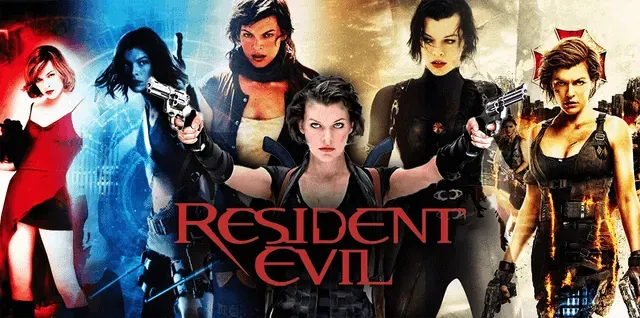
On the other side, an AI project that shot to number one worldwide on GitHub.
Actress Milla Jovovich recently did something very un-actor-like.
Together with an engineer friend, she used Claude to build an open-source AI memory system called MemPalace.

In 48 hours, it got 20,000 stars. It scored 96.6% on LongMemEval, ranked first worldwide among local solutions and cost $0.70 a year.
Those numbers are not the important part. What matters is the problem she identified.
AI’s biggest problem is not really that it is “not smart enough”
It is that it has no memory.
At first, she just wanted to make a game: a world, characters, branching storylines and level logic. At its core, that is a long chain of decisions.
But AI could not do it.
Not because it was not smart enough, but because it could not keep being the same “person.”
Every new conversation started over.
The logic you built yesterday, the paths you rejected and the choices you wrestled with all disappeared.
Like a highly intelligent partner who wakes up with amnesia every day.

Most existing solutions are doing the same thing:
They help AI “remember the results,” not “remember the process.”
Products such as Mem0 and Zep are built around the idea that AI should decide for itself what is worth remembering.
That is the problem.
What is truly valuable is rarely just the conclusion. It is the path.
Why did you choose A instead of B?
Why did you reject C?
Why were you uncertain at the time?
Those are cognitive assets, but they get discarded as noise.
MemPalace is not really a tool
It is a structure.
A very old one.
“Memory palace.”
Ancient Roman orators used it to remember long speeches: place information in an imaginary space, then retrieve it through its location.
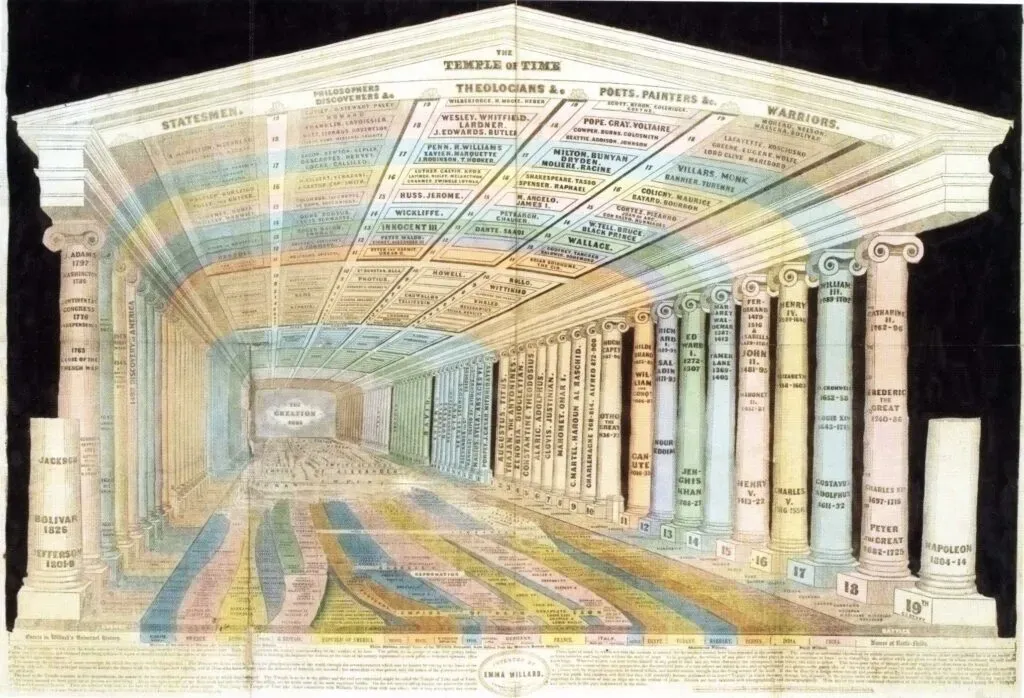
Milla’s idea is simple: bring this method into AI.
Each project is a “wing.” Each topic is a “room.” Different kinds of information are connected by “corridors.” “Tunnels” connect across topics.
Underneath it all, every original conversation is preserved.
Nothing is deleted. Nothing is summarized. No judgment is made for you.
The key is not the structure itself.
It is a choice:
Do you want AI to “optimize information” for you, or to “preserve complexity”?
MemPalace chooses the latter.
The result is direct: retrieval recall rose from 60.9% to 94.8%.
AI did not become smarter. The information was simply not amputated.
More interesting is what happened after the project was “exposed”
The open-source community quickly did what it does best: took the project apart.
People challenged its compression ratio.
They pointed out that some features were “borrowed.”
They said the promotion exaggerated the results.
Another company might have ended the conversation there. Instead, the team did something more important:
They admitted it publicly, corrected issues one by one, listed open issues and removed the exaggerated claims.
They kept just one line:
We would rather do the right thing than look impressive.
That step matters more than the 96.6% score.
Because it touches a more fundamental variable in the AI era:
The way trust is built is changing.
The final question is the important one
Why her? Why not an AI team at a big tech company?
The answer may not be in the technology, but in her point of view.
After 30 years as an actor, what she is especially sensitive to may not be algorithms, but narrative.
She did not see a “memory module.” She saw that an intelligent agent without continuity cannot take part in complex creative work.
Her friend made a joke on social media:
MemPalace → Multipass.
If you have seen The Fifth Element, you will remember the line:
“Multipass.”
No more obstacles.

In a way, what this project really opens up is not a solution to memory.
It is a bigger question:
What will happen to the way people work when AI starts to have continuity?
If you treat this only as an open-source project, it is already over.
But if you treat it as a signal—
then it has only just begun.