
When you open a paper book again these days, you may feel a subtle discomfort. It is not because the content is difficult. It is because the pace feels too slow. It is like switching from an endless stream of short videos to a long take in a film: you know the latter has more depth, but your body resists it instinctively.
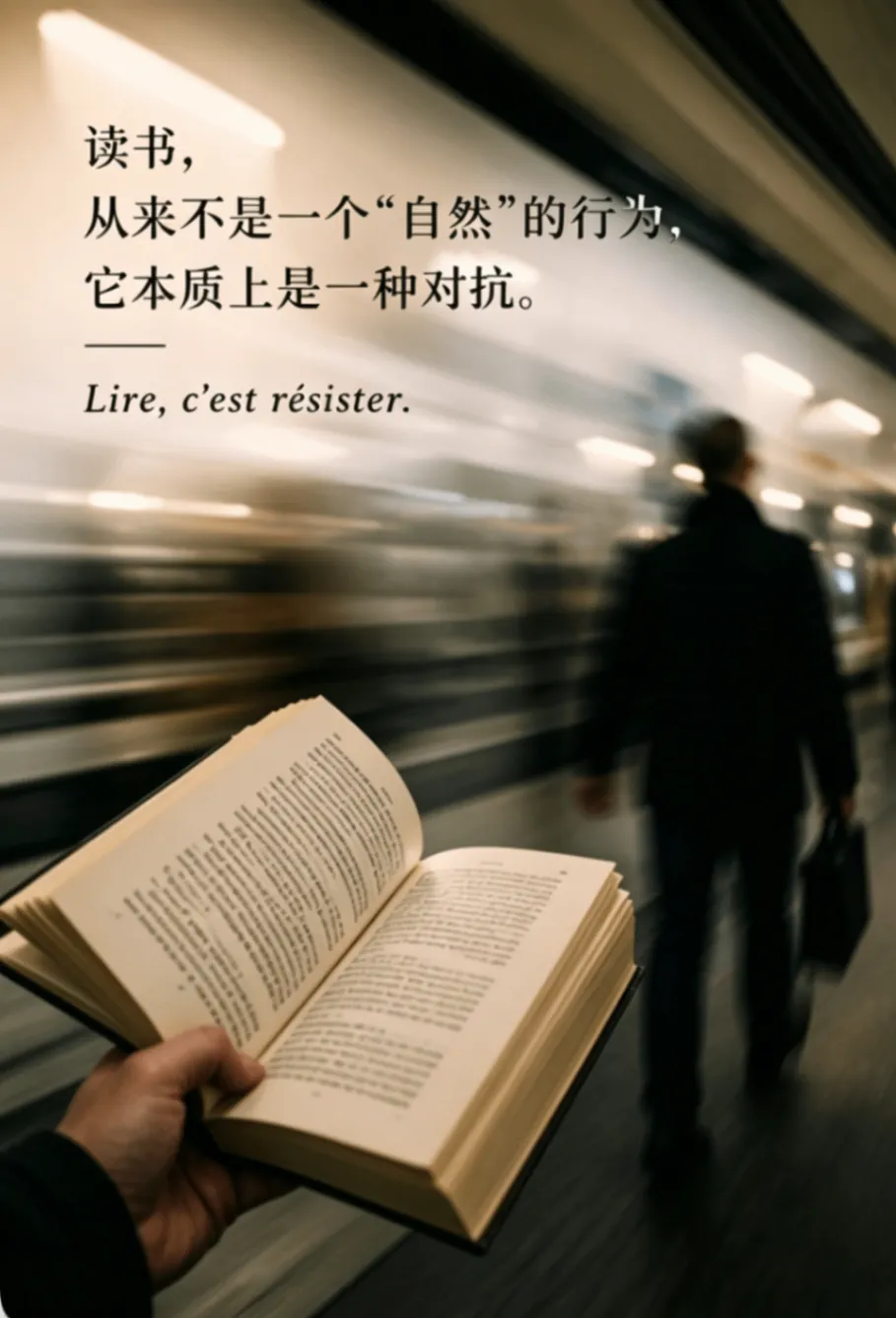
Reading has never been a “natural” activity. At its core, it is an act of resistance: resistance to the way fragmented content steals our attention.
In the algorithm-driven world, every kind of content competes for the time you spend paying attention: short videos, feeds, push notifications. They all industrialize the cutting of time into fragments.
Reading does the opposite. It asks you to give up one whole block of uninterrupted time. While big tech companies boast about how deeply their products understand human nature, reading is becoming more and more “against human nature.”
This creates a paradox: the more we talk about “lifelong learning,” the fewer people actually stick with deep reading. The system no longer rewards sustained immersion. It rewards speed of reaction, the ability to pull information together and the quick detection of trends. Reading has shifted from a “basic skill” to a “scarce strategy.”
The question worth discussing is no longer “Should we read?” but “Why read at all?” If the goal is just to get information, AI has already crushed reading on efficiency. Every large language model does the same thing: compress knowledge into direct answers.
Reading does the opposite. It unfolds an answer again and lets you experience the whole path of thought. The difference is not the volume of information, but the shape of the thinking.
You can think of AI as a “knowledge distiller,” while reading is a “cognitive fermenter.” Distillation gives you the result and makes you faster; fermentation gives your thinking “flavor” and makes it deeper. But most people just need speed, so the old story of reading as a way to “improve yourself” no longer works.
The more useful framework is this: reading is a tool for cognitive differentiation.

When everyone relies on the same information sources—short videos, AI summaries and popular opinions—your intellectual boundaries quickly converge with everyone else’s.
Books, especially niche and less popular ones, offer “non-consensus information.” Their value is not that they are right or wrong, but that they help you see structures other people have missed and step outside the group’s cognitive bubble. This has become clearer and clearer to me over the years:
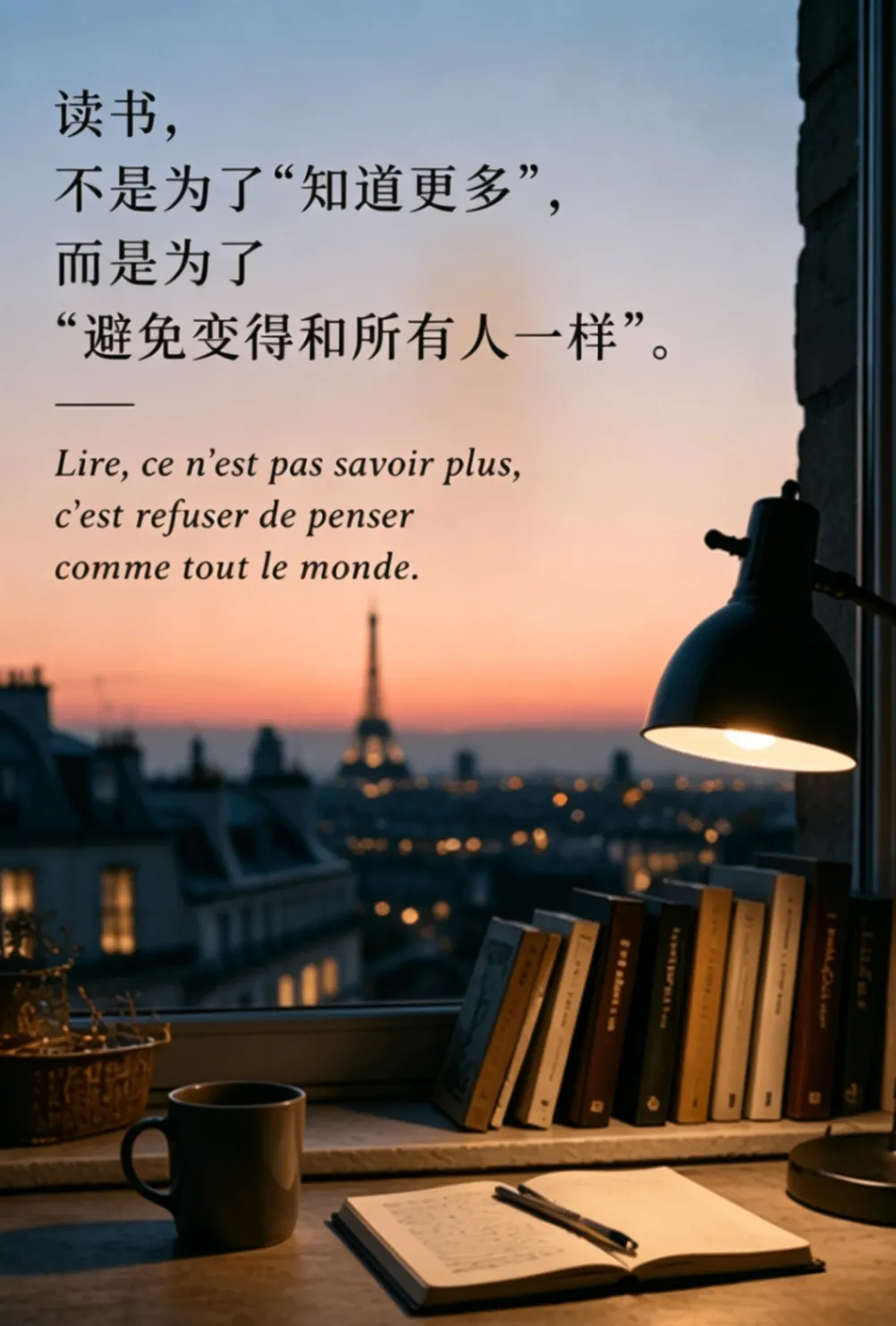
We do not read to “know more,” but to “avoid becoming like everyone else.”
At its core, this is a choice posed by the algorithmic era: are you still willing to preserve a block of time that is “not optimized”? There is no instant feedback, no likes and no growth in the numbers during that time. There is only you and a piece of writing that is not trying to flatter you. That may sound like a luxury, but it is precisely this luxury that gives reading new value.
People often ask how they should learn in the AI era. I usually do not answer directly, because the more important question is: what are you prepared to give up? Choose efficiency, and accept shallowness. Choose depth, and accept slowness. This has never been a question of methodology. It is a choice of path.
Today is World Book Day. I just realized that the last time I wrote about World Book Day was ten years ago → I’m ugly, so today I’m not reading; I’m just rambling.
Reading does not really need a holiday reminder. What matters is how you make room for “slow variables” in your own information system.
If you are redesigning your own way of thinking, or figuring out how AI can truly fit into your workflow, feel free to get in touch.
Some questions have never been solvable with a single prompt.