Did You Know Africa Has Its Own Hollywood?
7 minutes
Everyone knows Bollywood, India’s turbocharged answer to Hollywood. It had already raced past Hollywood in output value to become the world’s biggest film industry. But the runner-up may surprise you: it is not America’s Hollywood, but Africa’s—Nigeria’s “Nollywood.” In 2014, Nollywood’s output was valued at $3.3 billion, overtaking Hollywood for the first time.
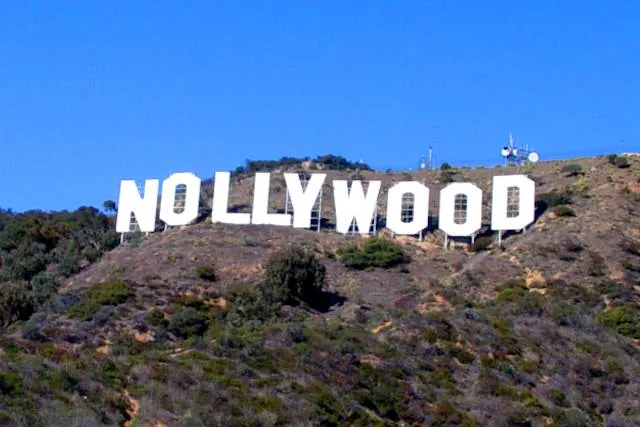
By number of films produced, Nollywood had surpassed the other two industries years earlier. China made just over 600 films in 2014; Nollywood alone made 1,844 in 2013. Imagine a Nigerian living in Guangzhou watching one film with breakfast, lunch, afternoon tea, dinner, and a late-night snack: they would have no trouble finding a homegrown movie to eat with every day of the year…
Yet even our well-traveled, open-minded readers, who have sampled every kind of unusual fare, may never have heard of Nollywood—let alone watched one of its films—even though it has been around for more than twenty years…
It was spring 1992… A Nigerian man named Kenneth Nnebue brought a shipment of blank videotapes back from Taiwan. Selling blank tapes alone did not earn much, he thought, so perhaps they would sell better with something on them. He co-wrote a script and spent $12,000 and a month making a film called Living in Bondage.
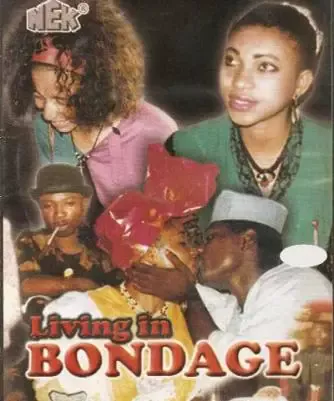 Living in Bondage VHS cover
The plot was essentially a Nigerian version of a pulp melodrama: a man becomes obsessed with witchcraft and sacrifices his wife in exchange for wealth. No one expected this highly amateur film—with not even bargain-basement special effects—to become a sensation on tape. It sold nearly a million copies. Historians call that year Nollywood’s year zero.
The business was so lucrative that Nigerians rushed to imitate it. Experience hardly mattered: pick up a camera and start filming. An average movie cost only $15,000 and could be shot in just five to seven days, with returns of at least ten times the investment. No one wanted to miss out. The plots all had a melodramatic, pulp-story feel: poor people striking it rich, witches poisoning their victims, family feuds, and other outrageous twists. Nearly every story ended with good rewarded and evil punished—unless the ending was simply being saved for a sequel…
Nollywood had only one business model: make films on video and sell them locally. Nigeria did have cinemas, but there were very few, they mostly screened Hollywood blockbusters, and tickets were beyond the reach of ordinary people. Civil war and insecurity had also wiped out most cheap open-air screenings. With average daily income below a dollar and life expectancy around fifty, watching a video at home was the safest choice.
Nollywood grew for more than a decade without foreign investment or government support, flourishing amid civil war and economic hardship. Videotapes gradually gave way to VCDs. By 2005, a decade ago, the industry was making about 2,000 films a year, worth $250 million. African cinema had become a system of its own, complete with its own “Oscars”: the Africa Movie Academy Awards.
 The Africa Movie Academy Awards have been presented since 2005
Around that time, Italian producer Franco Sacchi, who lived in Boston, heard about the remarkable Nollywood. He quickly brought two friends to its heartland, Lagos, Nigeria’s largest city, and interviewed many filmmakers and actors. Compared with Hollywood productions, the industry might have looked like a small, handmade workshop, but everyone was cheerful, as warm as the African sunshine, and optimistic about the future.
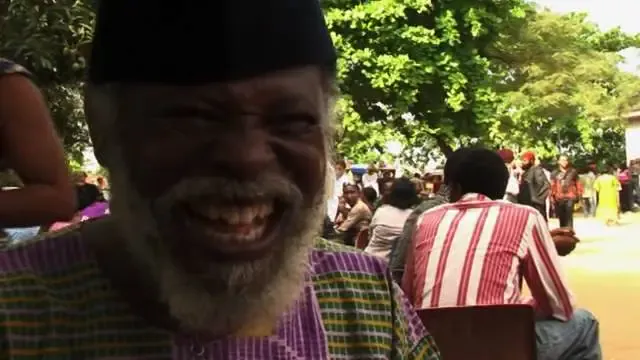
For example, this veteran director, who seems to see the future, said: “When we were growing up, we watched American westerns, Indian musicals, and Chinese kung-fu films. Now we have Nollywood, and I’m proud of it! In ten more years, we’ll surpass Hollywood—ha ha ha!”
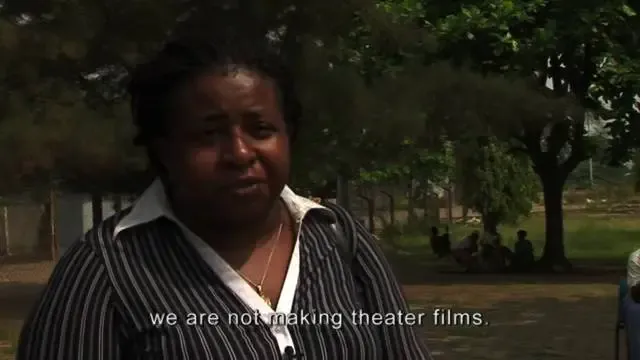
Or take this proud, outspoken woman director: “We make films for ordinary people, not the elite or people who live in glass houses. If they want to watch RoboCop or something else, that’s up to them.”
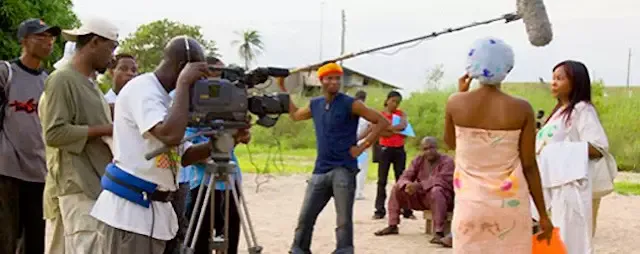
Franco also followed a crew making an “action film” called Checkpoint, about police corruption. There were fifty people in the crew, and the shoot was expected to take nine days—a “big production” by local standards. They had no soundstage; indoor scenes were filmed in houses or hotels.

For location shoots, the crew and equipment could just about fit into one van. If it rained, they had to wait for the sky to clear. They also had to stop when loudspeakers at a village church or mosque broadcast prayers, because they could not record usable sound. The shoot took eleven days, setting a new record for the crew’s longest production.

This man, who looks like a crime boss, is the director. He had his own view of Nollywood: “Here, if your film sells well, you immediately start the next one, because if you don’t make films, you don’t eat. We want ‘edutainment’: I believe in the power of film and sound. Whatever its subject, a movie should contain something that makes you think. Quality is not the main issue yet; it will improve over time. But first remember the society we live in: many people in Africa live on just one dollar a day, and they are the real audience for these films.”
Franco edited his Nollywood adventure into the documentary This Is Nollywood, released in 2007. It introduced many Western viewers to the realities of the industry. In 2008, Franco was invited to speak at TED and prepared a short version of the documentary especially for the audience.
<iframe frameborder="0" width="655" height="491.25" allow="autoplay; fullscreen" allowfullscreen="true" src="https://v.qq.com/txp/iframe/player.html?origin=https%3A%2F%2Fmp.weixin.qq.com&containerId=js_tx_video_container_0.7048579567312554&vid=f0178yioivz&width=655&height=491.25&autoplay=false&allowFullScreen=true&chid=17&full=true&show1080p=false&isDebugIframe=false"></iframe>Franco Sacchi’s TED TalkRunning time: 17 min 29 sec
One line from Franco’s talk captures the essence of Nollywood—and perhaps of cinema itself:
“When you are stuck in traffic in Lagos, you might buy a film, or some bananas or water. Yes, I have to say, it really proves that storytelling is a commodity, a necessity. Life is impossible without stories.”
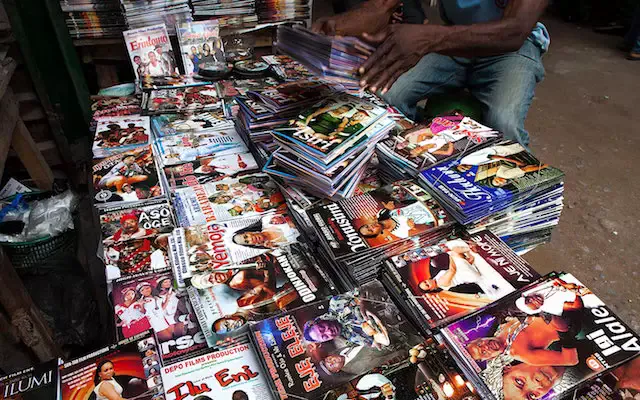

A few years later, VCDs gave way to DVDs. Nollywood films became more professionally made, their subjects broadened, and their influence grew. Even the famously professional Japanese began looking toward Nigeria. In 2013, Japan’s WOWOW television channel followed the production of Black Silhouette, a new film by young Nigerian director Charles Uwagbai.


The crew and equipment still had to squeeze into a battered van for location work, but the subject matter, equipment, and production process were all professional by now.
The film addressed social issues rarely seen in Nollywood, including childhood sexual abuse and prostitution. A professional screenwriter wrote the script; if the producer was unhappy, they could bring in another writer to polish it.
The young director’s limited budget went toward paying professional actors and renting a hotel as a set. But the socially important, pioneering subject persuaded some idealistic filmmakers to work for free. The director even tried to cut meal costs by serving bread instead of rice. The camera crew would not compromise on food.
 The crew protests the switch from rice to bread
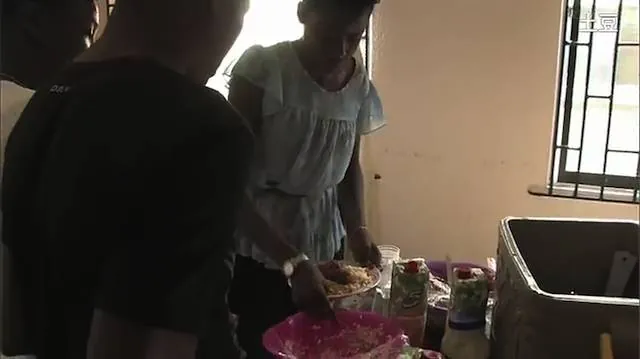 To save money, the director asked his fiancée to cook rice,
which she brought to the crew as a treat.
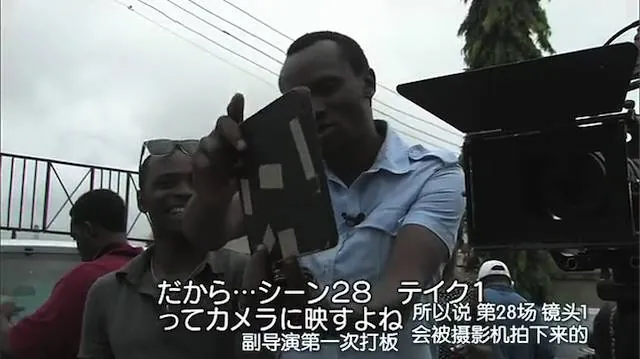 The director shows a first-time assistant director how to use the clapperboard.
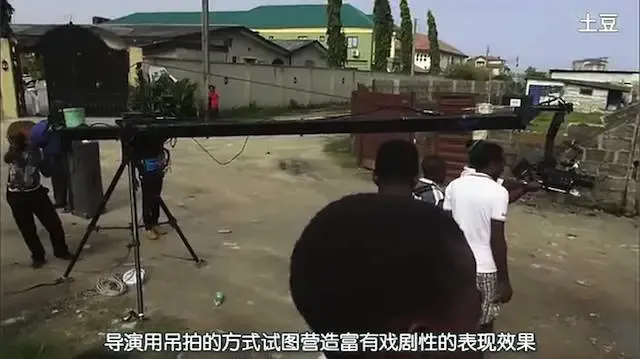
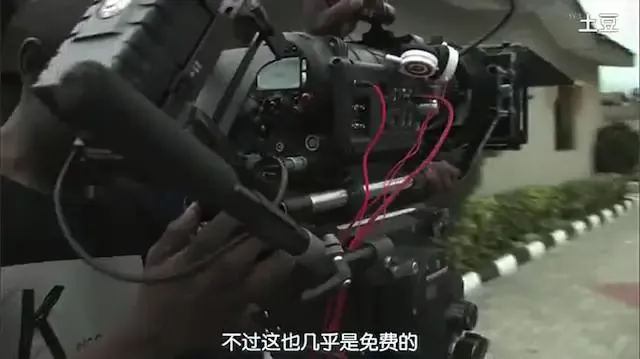
Most of the advanced equipment had simply been borrowed for free.
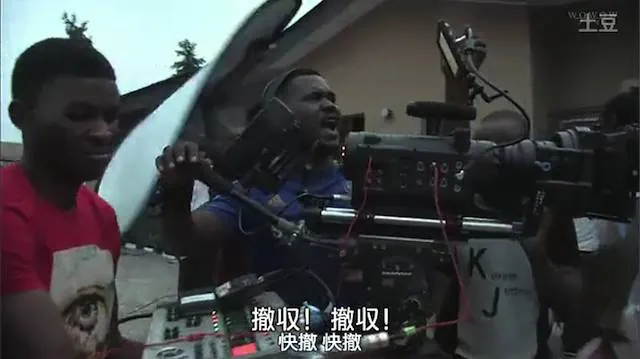
They had just finished praying when the cameras started rolling—and a storm broke out…
Despite all the obstacles, filming wrapped on schedule in ten days. The process was tight on resources but full of laughter. The documentary’s moving narration by Ryunosuke Kamiki (!!) makes you admire these young Nollywood filmmakers all the more:
“Cities and society are changing at an astonishing pace. Films cannot lag behind the expectations of their audiences. They draw close to people’s anxieties and loneliness, and give them dreams. That is Nollywood cinema.”
This documentary is fascinating, but it cannot be uploaded to Tencent Video. To watch it, scan the QR code below (press and hold to follow the link):

The Birth of Nollywood
— Nigeria’s Dream and Passion to Become the World’s Largest Film City
Running time: 43 min 5 sec
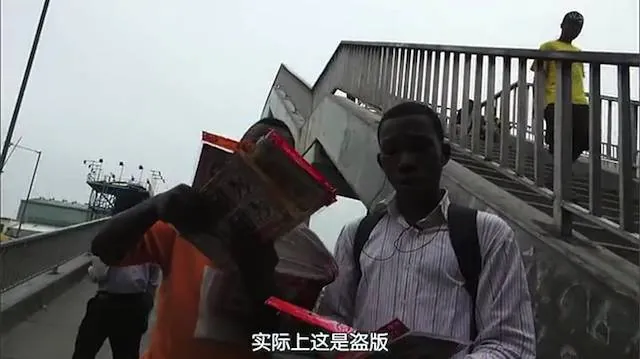
Piracy remains the biggest obstacle to Nollywood’s growth. Although the industry is valued at $3.3 billion, less than 1% comes from legitimate box-office receipts and royalties; the rest comes from illegally distributed discs, which sell for about $2 each. Nollywood is fighting piracy while turning to video-on-demand to stem the losses and actively expanding into markets beyond Africa.
On the set of October 1
Since last year, some new Nollywood films have begun reaching the U.S. market. One example is Kunle Afolayan’s thriller October 1, released worldwide as a Netflix exclusive. Netflix had already distributed ten Nollywood films. It also paid $12 million for the rights to adapt the Nigerian novel Beasts of No Nation; the film premiered at the Venice Film Festival this year to wide acclaim. Chinese filmmakers have even traveled to Nollywood to take part in producing and shooting films. Perhaps before long, Nollywood movies will be available on Chinese streaming platforms too.

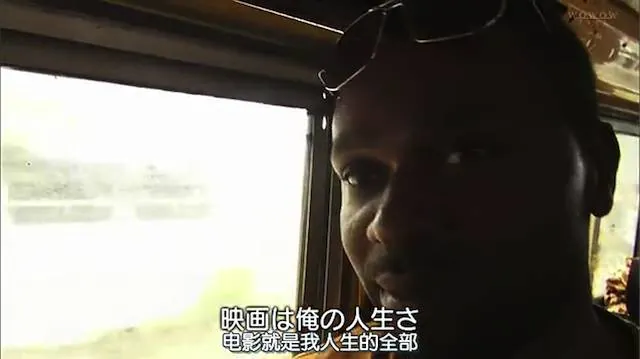
As usual, here is a little quiz at the end: time to test your English listening skills!
<iframe frameborder="0" width="677" height="507.75" allow="autoplay; fullscreen" allowfullscreen="true" src="https://v.qq.com/txp/iframe/player.html?origin=https%3A%2F%2Fmp.weixin.qq.com&containerId=js_tx_video_container_0.9062461035689179&vid=b01780r7tpk&width=677&height=507.75&autoplay=false&allowFullScreen=true&chid=17&full=true&show1080p=false&isDebugIframe=false"></iframe>Documentary: *This Is Nollywood*This Is Nollywood
Running time: 56 min 45 sec; British English with a Nigerian accent; no subtitles

Cinema is a dangerous adventure