Stanley Kubrick, Film Buff: His List of Favorite Films
12 minutes
Stanley Kubrick
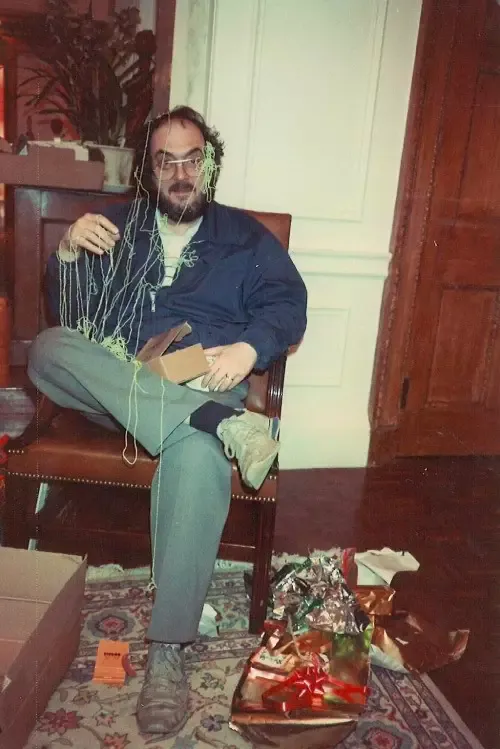
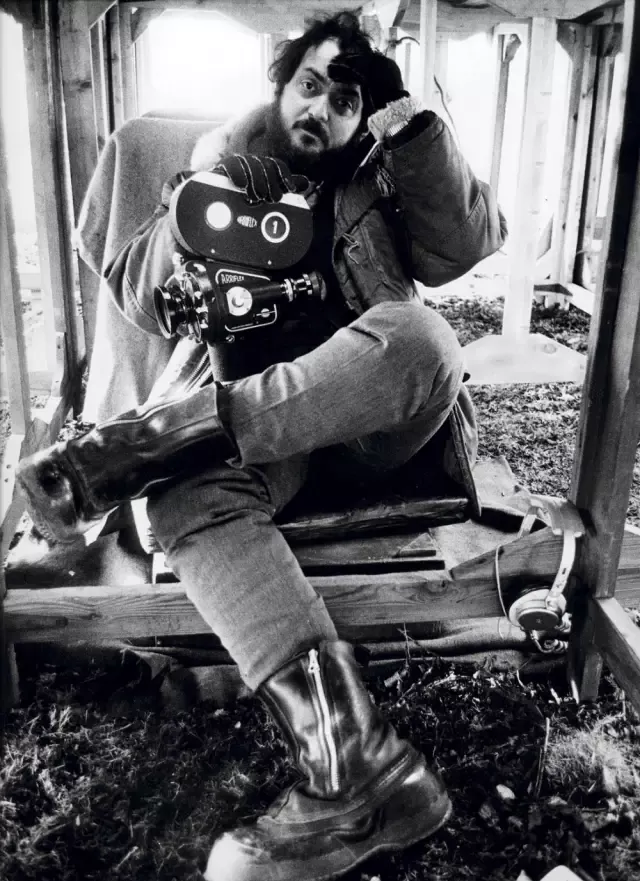
On Stanley Kubrick’s eighty-fifth birthday, Nick Wrigley, with the help of Kubrick’s close collaborator Jan Harlan, put together a list of Kubrick’s favorite films and viewing habits.
Stanley Kubrick spent nearly half a century in the film business, from his first short documentary in 1951 to his final feature, Eyes Wide Shut, in 1999. He worked relentlessly to reject the merely adequate and make films that would endure. On every project, he was intent on finding the right story. Some arrived quickly: in the 1960s, Terry Southern gave Kubrick a copy of Anthony Burgess’s novel A Clockwork Orange, and Kubrick promptly persuaded Warner Bros. to buy the rights. Other projects moved slowly; some were researched for years before circumstances beyond his control forced him to abandon them. But once he chose a story, Kubrick threw himself into making a film unlike anything that had come before.
Fourteen years after Kubrick’s sudden death, admirers remain as intensely fascinated by every detail of his life as he was exacting about his filmmaking. Every aspect of his films has drawn endless attention. In the late 1990s, while he was making his final film, Sight and Sound wrote: “Few directors still working have our readers quite so captivated.” (Sight and Sound, September 1999.)
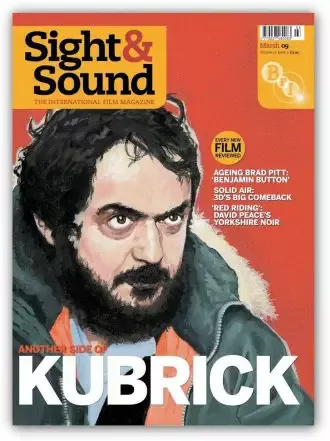 Sight and Sound magazine
As an admirer myself, I love Kubrick’s films and his remarkable ability to solve problems in every area of life. The one unexplored territory in Stanley’s cinematic life, I would argue, is his relationship with other people’s films—what he watched and what he liked. In his later years he avoided discussing this publicly, giving only one or two promotional interviews when a new film was about to appear. But with help from colleagues, friends, and filmmaking partners, we can now piece together the puzzle.
I tried to gather every verified detail I could find and run it past informed authorities. I was delighted to find Kubrick’s confidant Jan Harlan, who was happy to talk about things other than Kubrick’s own films (he must have been asked about the ending of 2001: A Space Odyssey countless times). So I decided to mine his memories for a few gems.
If you do not find it interesting that David Lynch’s favorite films include Rear Window and Sunset Boulevard, that Woody Allen does not think Some Like It Hot is funny, or that Kubrick liked all these filmmakers, the rest probably will not interest you much either.
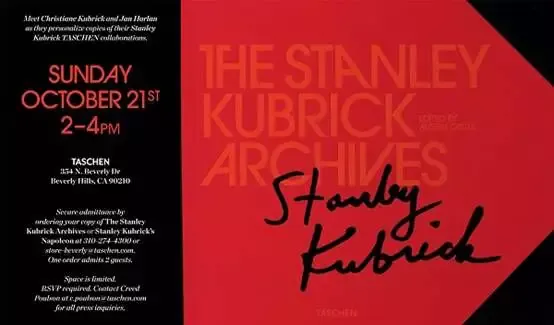 Taschen’s magnificent The Stanley Kubrick Archives
Why do Kubrick’s tastes matter so much? For years, I have enjoyed digging up whatever I could about the films he liked; it gradually became a hobby. Whenever I stumbled upon one—usually through a newly uncovered anecdote (thank you, internet!) or Taschen’s magnificent book The Stanley Kubrick Archives—I could use it as a lens on another side of his sensibility. My appreciation for him and the films he loved kept growing. As I followed these discoveries through the eleven features I revisit every few years (not counting the two he disowned), they led me down a fascinating path. I am sure that after reading this, some discerning film festival will organize a season of “Films Kubrick Loved.”
The Early Years
Michel Simon said that, apart from playing chess every day—his favorite pastime—the young Kubrick “assiduously attended screenings at the Museum of Modern Art.” There he saw the great films of the silent era. His high-school classmate and early collaborator Alex Singer especially remembered going to see Alexander Nevsky (1938) together. Kubrick promptly bought a record of Prokofiev’s score and played it over and over, until his sister, driven mad by the music, smashed it over his head.
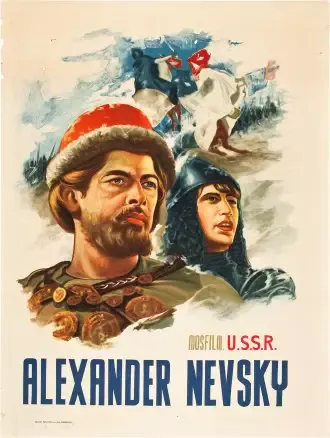 Alexander Nevsky
In a 1987 newspaper interview, Kubrick recalled that period of his life:
“When I watched Stroheim, Griffith, and Eisenstein at the Museum of Modern Art, the image of cinema that possessed me was born. I was fascinated by those wonderful films. I was not thinking, ‘Good heavens, I’ll go to Hollywood, earn $5,000 a week, and live in a mansion with a sports car.’ I truly loved movies. … I knew nothing about filmmaking, but I had seen enough bad movies to think that, even knowing nothing, I could make something at least as good. That is why I started, why I tried to make films.”
Kubrick’s Ten Best Films of 1963
The earliest—and, as far as we know, only—top-ten list made by Kubrick was for the American magazine Movie, a new publication founded in 1962 that ran until 1976. He gave it this list in 1963:
I Vitelloni (1953)
I Vitelloni (Fellini, 1953)
Wild Strawberries (Bergman, 1957)
Citizen Kane (Welles, 1941)
The Treasure of the Sierra Madre (Huston, 1948)
City Lights (Chaplin, 1931)
Henry V (Olivier, 1944)
La Notte (Antonioni, 1961)
The Bank Dick (Fields, 1940)
Roxie Hart (Wellman, 1942)
Hell's Angels (Hughes, 1930)
Kubrick on Other Directors
Harlan told me: “Stanley might have revised that 1963 list seriously later on. Wild Strawberries, Citizen Kane, and City Lights would have stayed, but he preferred Kenneth Branagh’s Henry V to Olivier’s old-fashioned version.” (It is striking how many great filmmakers have named City Lights as a favorite: Bernardo Bertolucci, Robert Bresson, Miloš Forman, Kubrick, David Lean, Carol Reed, Andrei Tarkovsky, King Vidor, and Orson Welles.)
Michel Simon pointed out that Max Ophuls and Elia Kazan were conspicuously absent from Kubrick’s 1963 top ten. In a 1957 interview with Cahiers du cinéma, Kubrick said:
“I reserve the highest place for Max Ophuls. To me, he is truly perfect. He had an instinct for finding good material and made the most of it. He was also a great director.”
In 1957, Kubrick also spoke about Kazan:
“…There is no doubt he is the best director in America. He can work miracles with his actors.”
In 1960, Kubrick said:
“I believe Bergman, De Sica, and Fellini are the only three filmmakers in the world who are not artistic opportunists. I mean, they do not sit around waiting for a good story to fall from the sky so they can turn it into a film. They have their own ideas, return to them in their films, and write for themselves or work with original material.”
In 1966, on another rare occasion, he said:
“There are very few directors whose work makes you want to see everything they have done. I would put Fellini, Bergman, and David Lean at the top of my first list, with Truffaut first in the next tier.”
Kubrick rarely spoke publicly about other directors, which makes these few remarks especially worth noting. (Sight and Sound, Spring 1972 interview.)
On Charlie Chaplin:
“If a film is truly special, how it is made does not really matter. Chaplin made films in a simple style, rather like I Love Lucy, but the story always hypnotizes you, and you stop caring that the films are not cinematic in the strict sense. He often used crude sets, conventional lighting, and so on, yet he made great films. His films may endure longer than anyone else’s.”
On Abel Gance’s ** Napoléon ** (1927):
“I know this film is a masterpiece of cinematic invention, bringing innovation to the screen. Its inventiveness is still there for anyone bold enough to try it again. But on the other hand, as a film about Napoleon, I have to say I have always been disappointed by it.”
On two actors he admired most:
“When you think of the greatest moments in film, I think you remember images, not scenes—certainly not dialogue. The best thing cinema does is combine images with music. I believe you remember those moments. The other thing is the way an actor does something: Emil Jannings taking out a handkerchief and blowing his nose in The Blue Angel, or Nikolay Cherkasov’s wonderful, slow turn in Ivan the Terrible.”
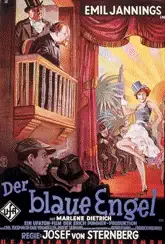 The Blue Angel (1930)
On Unexpected Inspiration
“Some of the most compelling examples of cinematic art can be found in the best television commercials.” (Kubrick, Rolling Stone, 1987.)
The only authoritative list of Kubrick’s favorite films appeared in September 1999, when his daughter Katharina Kubrick-Hobbs posted a courteous reply to a thread on the Kubrick newsgroup alt.movies.kubrick.
“People have this strange urge to make lists of things—the best, the worst, the greatest, the dullest, and so on. … Do not rack your brains over a list that he probably would not even remember. He liked films with a style of their own. By the way, I happen to know he liked these:
Closely Watched Trains (Menzel, 1966)
An American Werewolf in London (Landis, 1981)
The Firemen’s Ball (Forman, 1967)
Metropolis (Fritz Lang, 1927)
The Spirit of the Beehive (Erice, 1973)
White Men Can’t Jump (Shelton, 1992)
Beauty and the Beast (Cocteau, 1946)
The Godfather (Coppola, 1972)
The Texas Chain Saw Massacre (Hooper, 1974)
Dog Day Afternoon (Lumet, 1975)
One Flew Over the Cuckoo’s Nest (Forman, 1975)
Citizen Kane (Welles, 1941)
Abigail’s Party (Mike Leigh, 1977)
The Silence of the Lambs (Demme, 1991)
“I also know he hated The Wizard of Oz. Ha!”
 The Firemen’s Ball (1967)
At the end of 2012, a user-made list appeared on the website of the highly respected Blu-ray and DVD label The Criterion Collection and quickly went viral. A slew of poorly written articles then misled readers into thinking it was a list curated by Criterion. In fact, Criterion fan Joshua Warren compiled it by combining two existing lists—Kubrick’s 1963 top ten and Katharina’s list—and adding other interesting films, mostly titles Criterion had released.
This article sets out to build a comprehensive, chronological list of every film Kubrick is known to have praised. I hope it brings more stories to light. I will keep it updated.
(1921–1998)
The Phantom Carriage (Victor Sjöström, 1921)
Metropolis (Fritz Lang, 1927)
Hell's Angels (Howard Hughes, 1930)
The Blue Angel (Josef von Sternberg, 1930)
City Lights (Charlie Chaplin, 1931)
The Bank Dick (W. C. Fields, 1940)
Citizen Kane (Orson Welles, 1941)
Roxie Hart (William Wellman, 1942)
Henry V (Laurence Olivier, 1944)
Children of Paradise (Marcel Carné, 1945)
Beauty and the Beast (Jean Cocteau, 1946)
The Treasure of the Sierra Madre (John Huston, 1947)
Carnival in Flanders (Jacques Feyder, 1935)
Pacific 231 (Jean Mitry, 1949)
Rashomon (Akira Kurosawa, 1950)
La Ronde / Le Plaisir / The Earrings of Madame de… (Max Ophüls, 1950/51/53)
Miss Julie (Alf Sjöberg, 1951)
Edward and Caroline (Jacques Becker, 1951)
Casque d’Or (Jacques Becker, 1952)
I Vitelloni (Federico Fellini, 1953)
La Strada (Federico Fellini, 1954)
Seven Samurai (Akira Kurosawa, 1954)
Smiles of a Summer Night (Ingmar Bergman, 1955)
Bob le Flambeur (Jean-Pierre Melville, 1956)
Wild Strawberries (Ingmar Bergman, 1957)
Throne of Blood (Akira Kurosawa, 1957)
La Notte (Michelangelo Antonioni, 1961)
Very Nice, Very Nice (Arthur Lipsett, 1961)
Mary Poppins (Robert Stevenson, 1964)
Siege of Manchester (Herbert Wise, 1965)
The Battle of Algiers (Gillo Pontecorvo, 1966)
Closely Watched Trains (Jiří Menzel, 1966)
The Firemen’s Ball (Miloš Forman, 1967)
The Anderson Platoon (Pierre Schoendoerffer, 1967)
Peppermint Frappé (Carlos Saura, 1967)
If…. (Lindsay Anderson, 1968)
Rosemary’s Baby (Roman Polanski, 1968)
Once Upon a Time in the West (Sergio Leone, 1968)
Ådalen 31 (Bo Widerberg, 1969)
Tora! Tora! Tora! (Richard Fleischer, 1970)
The Emigrants (Jan Troell, 1970)
Get Carter (Mike Hodges, 1971)
McCabe & Mrs. Miller (Robert Altman, 1971)
Harold and Maude (Hal Ashby, 1971)
Cabaret (Bob Fosse, 1972)
Cries and Whispers (Ingmar Bergman, 1972)
Deliverance (John Boorman, 1972)
Solaris (Andrei Tarkovsky, 1972)
La Bonne Année (Claude Lelouch, 1973)
The Exorcist (William Friedkin, 1973)
The Spirit of the Beehive (Víctor Erice, 1973)
American Graffiti (George Lucas, 1973)
The Texas Chain Saw Massacre (Tobe Hooper, 1974)
The Cars That Ate Paris (Peter Weir, 1974)
Picnic at Hanging Rock (Peter Weir, 1975)
Cría cuervos (Carlos Saura, 1975)
Dog Day Afternoon (Sidney Lumet, 1975)
One Flew Over the Cuckoo’s Nest (Miloš Forman, 1975)
Annie Hall (Woody Allen, 1977)
Close Encounters of the Third Kind (Steven Spielberg, 1977)
Abigail’s Party (Mike Leigh, 1977)
Eraserhead (David Lynch, 1976)
Girlfriends (Claudia Weill, 1978)
The Big Bus (Carl Gottlieb, 1979)
Manhattan (Woody Allen, 1979)
All That Jazz (Bob Fosse, 1979)
Alien (Ridley Scott, 1979)
Apocalypse Now (Francis Ford Coppola, 1979)
An American Werewolf in London (John Landis, 1981)
Blood Wedding (Carlos Saura, 1981)
Modern Romance (Albert Brooks, 1981)
E.T. the Extra-Terrestrial (Steven Spielberg, 1982)
Danton (Andrzej Wajda, 1984)
Heimat (Edgar Reitz, 1984)
Platoon (Oliver Stone, 1986)
The Sacrifice (Andrei Tarkovsky, 1986)
Babette’s Feast (Gabriel Axel, 1987)
House of Games (David Mamet, 1987)
The Conqueror (Bille August, 1987)
Radio Days (Woody Allen, 1987)
The Vanishing (George Sluizer, 1988)
Henry V (Kenneth Branagh, 1989)
Roger & Me (Michael Moore, 1989)
The Decalogue (Krzysztof Kieślowski, 1990)
The Silence of the Lambs (Jonathan Demme, 1990)
Husbands and Wives (Woody Allen, 1992)
White Men Can’t Jump (Ron Shelton, 1992)
The Red Squirrel (Julio Medem, 1993)
Pulp Fiction (Quentin Tarantino, 1994)
Boogie Nights (Paul Thomas Anderson, 1998)