A French Wine from Qianlong’s Reign Sells for a Fortune; Three Bottles Could Buy a Home
Last Saturday, the Vercel family winery in France’s Jura region auctioned the last three bottles of its wine from 1774. The most expensive bottle fetched an astonishing €103,700, or about RMB 780,000.
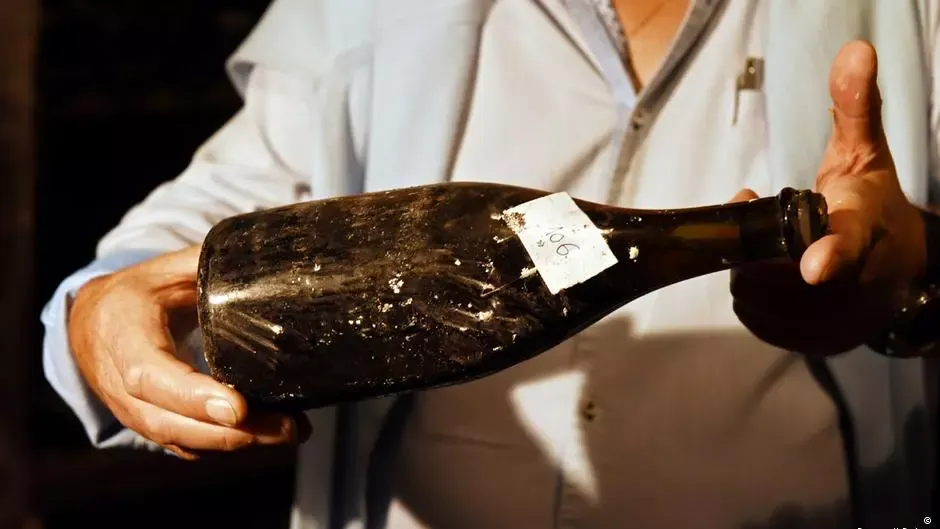
This is what a bottle of wine worth RMB 780,000 looks like.
The auction house had estimated each bottle at €15,000–20,000. At the previous auction in 2011, one of the same wines had already fetched €57,000, leaving people stunned. No one expected the price to more than double this time.
The other two bottles were hardly cheap: they sold for €76,250 and €73,200. Together, the three came to nearly RMB 2 million—enough to buy a bathroom in a Beijing, Shanghai, Guangzhou, or Shenzhen CBD, at least. The buyers were reportedly Canadian and American collectors, not Chinese!
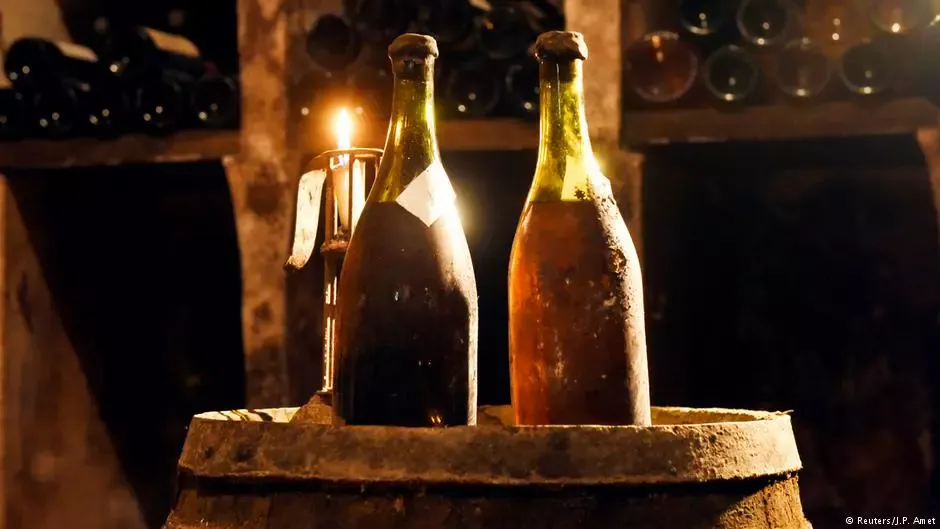
Two of the bottles on display in the cellar before the auction.
This 1774 vintage is among the oldest surviving wines in the world. What did the year 1774 mean? In the East, it was the height of the Qing dynasty under the Qianlong Emperor, then in his thirty-ninth year on the throne. China’s population was nearing 300 million, about one-third of the world’s population at the time. In the West, France was still basking in the afterglow of the Sun King, Louis XIV.
When Anatoile Vercel pruned his vines at the start of the year, he could not have known that the reigning King Louis XV was nearing death. By the autumn harvest, Louis XVI—the “first locksmith of France”—had taken the throne. Napoleon was still a five-year-old boy on Corsica who did not speak French, and the United States would not become independent for another two years.
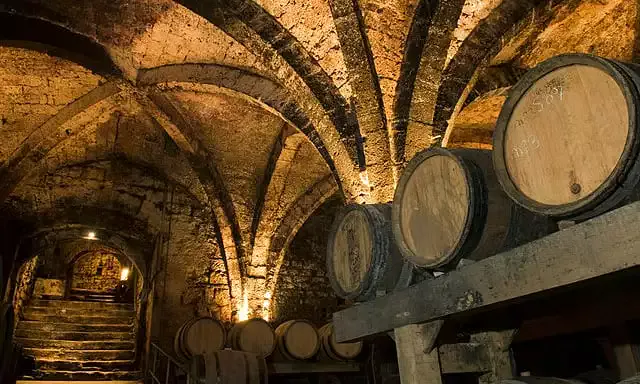
A cellar in the Jura region.
This is no ordinary wine: it is the Jura region’s specialty, vin jaune, or “yellow wine.” Yes, alongside red wine (vin rouge), white wine (vin blanc), and rosé (vin rosé), there is also yellow wine (vin jaune).
Vin jaune is made from Savagnin, a white grape variety. This unusual, high-quality grape is grown today only in the Jura appellations of Arbois and Château-Chalon in eastern France, and production is very small.
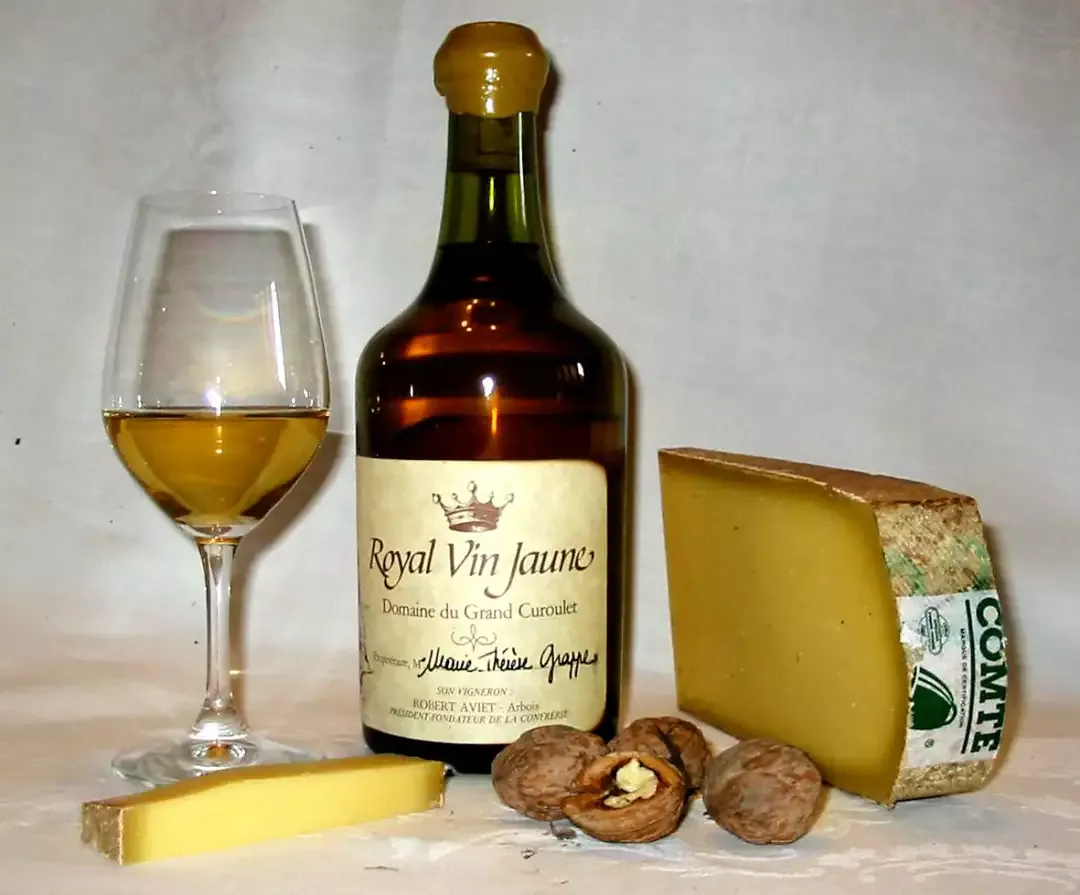
The color and bottle of vin jaune differ from those of Bordeaux red wine.
Vin jaune tastes much like Spanish sherry and is also close to China’s Shaoxing huadiao wine. It has a rich, powerful aroma, often with notes of walnut, almond, and beeswax.
Vin jaune has excellent aging potential. It must mature for at least six years before bottling; its golden color comes from a film of yeast that forms naturally during fermentation. The Jura is famous around the world for this wine, especially the Arbois appellation.
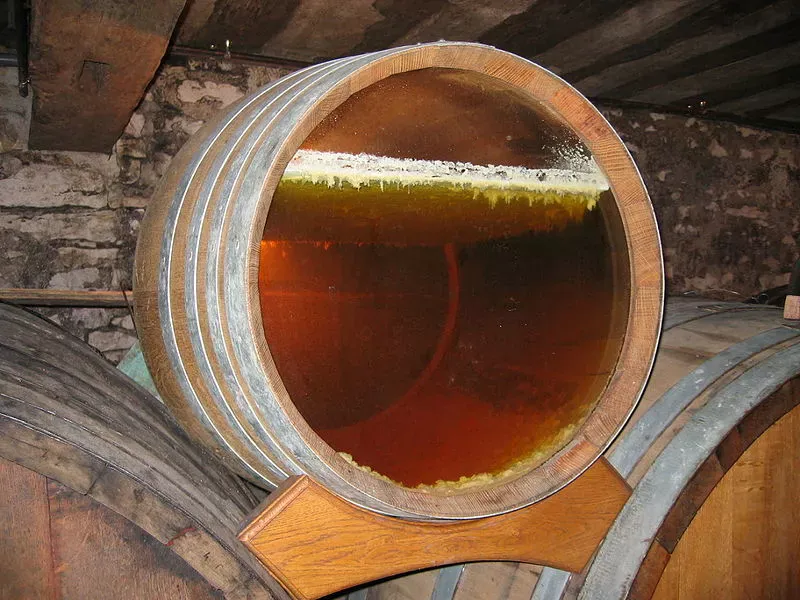 Yeast film on top of the wine barrel
Can a wine that is more than 200 years old still be drunk? There is no need to worry: the great biologist Louis Pasteur put his life and reputation on the line for you.
Pasteur grew up in Arbois and knew the Vercel family’s descendants well. In 1881, when he was elected to the French Academy—whose members are known as the “Immortals”—the Vercels opened one of these bottles of yellow wine to celebrate. At the time, the wine was 107 years old.
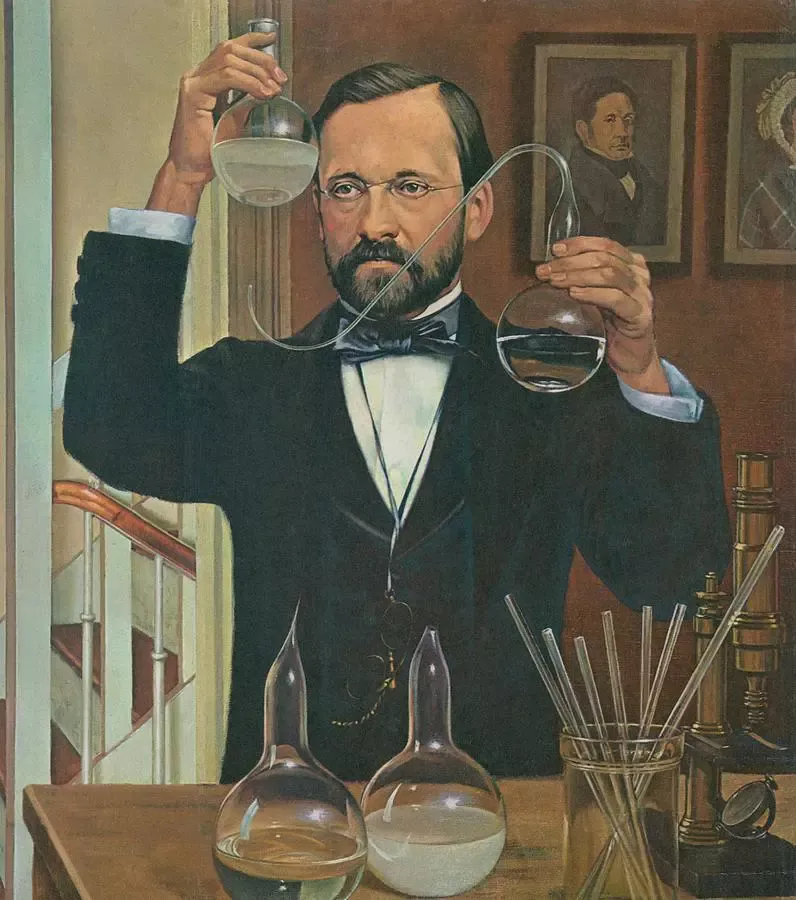
Pasteur: “Come on, bottoms up—here’s to a glass of bacteria!”
The most recent tasting took place in Arbois in 1994, when 24 leading wine tasters shared one of the bottles and called it “excellent.” This amber-gold nectar carried aromas of “nuts, pepper, curry, cinnamon, vanilla, and dried fruit.” Those who tasted it remembered it fondly, and gave it a score of 9.4 out of 10.
One last bit of trivia: the Jura region takes its name from the Jura Mountains, on the border between France and Switzerland. In 1829, French paleontologist Alexandre Brongniart named the Jurassic Period—the age when dinosaurs roamed—after these mountains. Imagine sipping yellow wine while watching Jurassic Park. You could raise a glass and say:
A cup of rustic wine, old friends reunite;
The countless affairs of past and present
All become stories told with a smile.
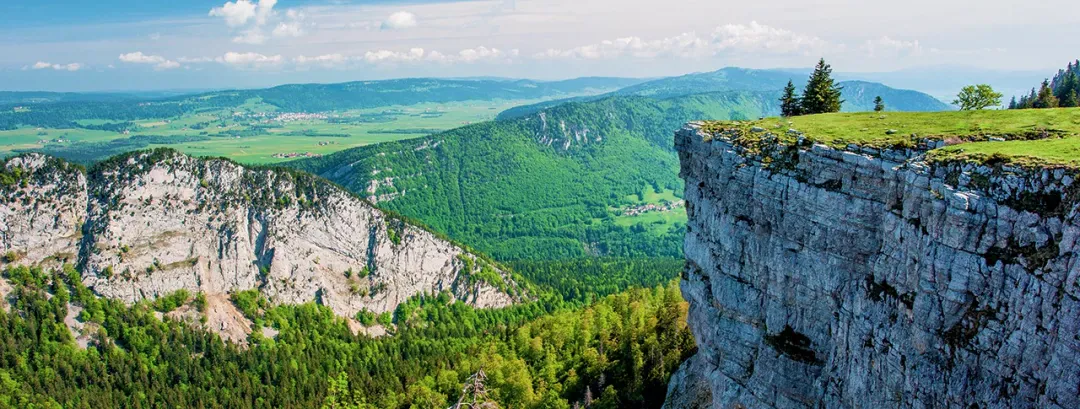
Scenery in the Jura Mountains.