On June 10, the film Dreams of Violets premiered at the Tribeca Film Festival. The film is AI-generated, 75 minutes long and cost $2,000.
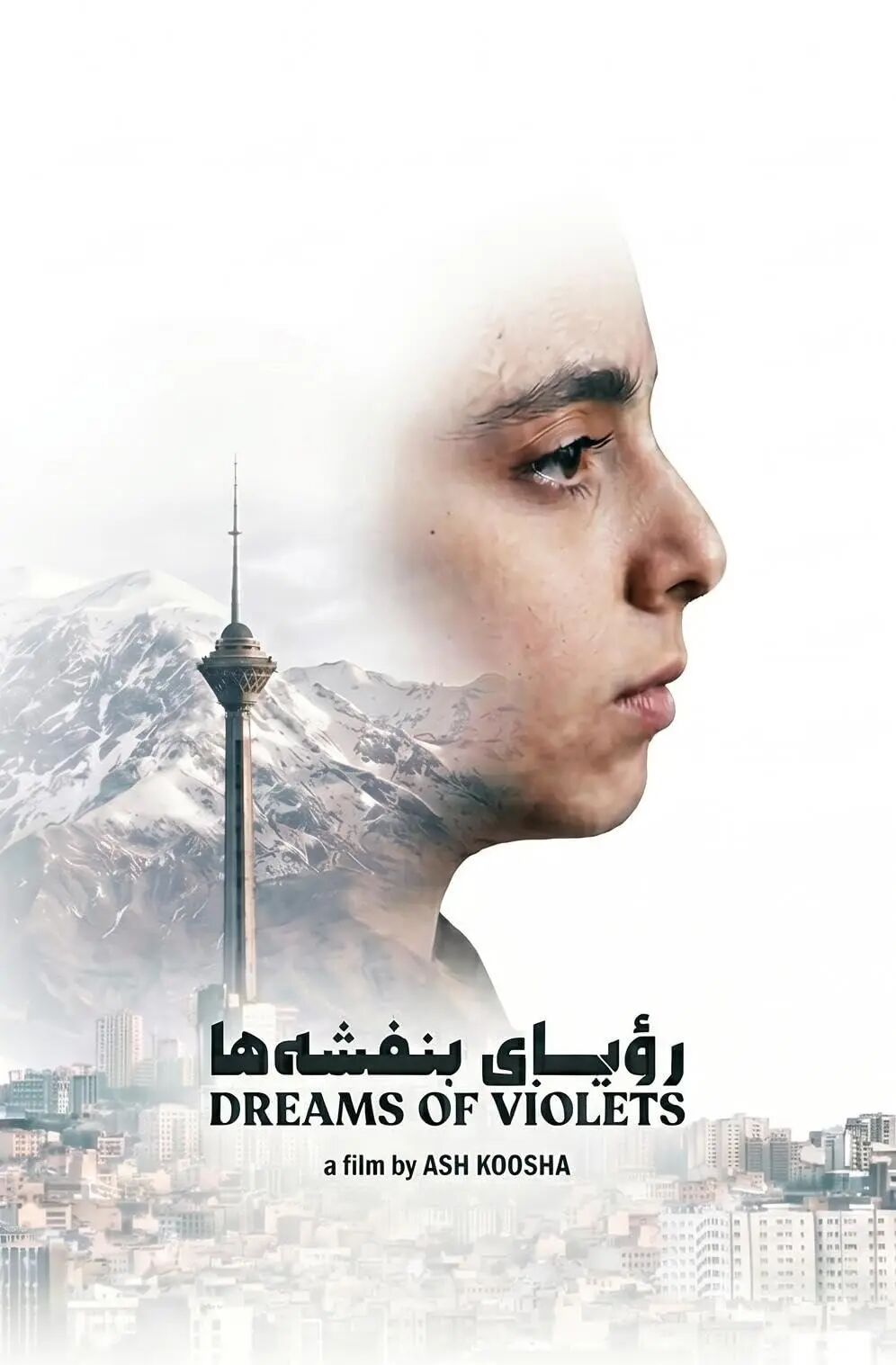
The predictable headline would be: “A film made for $2,000—AI is coming for Hollywood’s jobs.”
Fair enough. But the part that really makes you think is not the low cost. It is this: there was no set.
When we watch a film, we assume there is a group of people standing behind the screen. Someone is setting the lights. Someone is pushing the dolly. Someone is waiting for the clouds to clear. Someone is polishing the same line of dialogue for the seventeenth take. A film feels like a film not only because it has images, but because we know someone was there, spending time and patience to make a moment really happen.
Dreams of Violets quietly removes that assumption.
It is not a few seconds of AI spectacle on a short-video platform, nor a demo made for investors. It has entered a serious mainstream festival like Tribeca. In effect, it is saying: you may hate it, but you can no longer pretend it is still waiting outside the door.
What it replaces is not the camera, but the permit
Director Ash Koosha says the story would have been impossible to shoot in the traditional way.
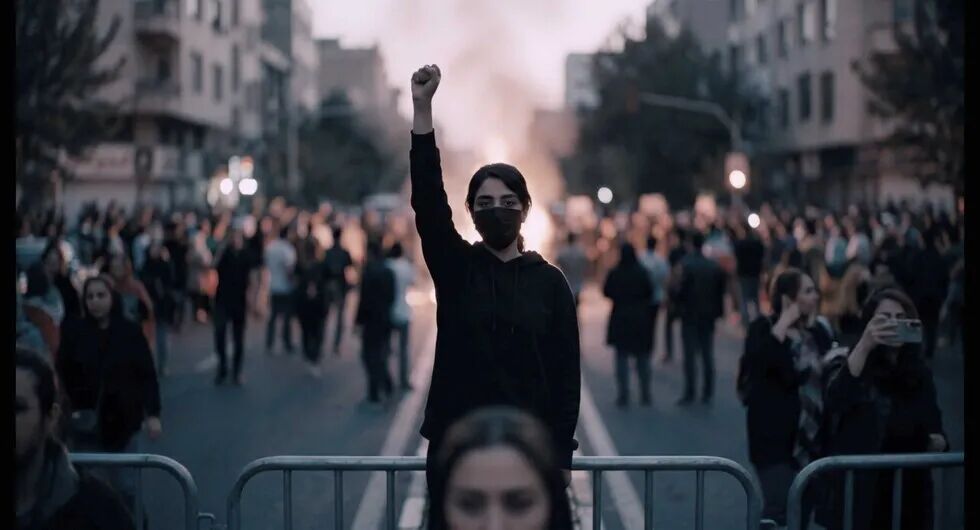
Part of it involves protests in Iran, putting real people at risk. Meanwhile, an independent creator cannot summon the whole apparatus of a crew, locations, actors and funding.
So what AI replaces first is not the camera. It is the permit.
You do not have to find someone to approve a location, persuade someone to give you millions, put actors’ faces on screen, or convince an industry pipeline that your story deserves to be filmed. You move every one of those “not approved, not allowed” stages into a machine.
That is what makes this interesting. The film industry has never been short of money so much as access: who can get the money, who can join a production, who can film at a certain location. AI takes those doors apart, leaving one creator alone with a tool.
“One person is a whole studio” sounds romantic. In practice, it is a little cruel. It is romantic because you no longer have to kneel and wait for funding; it is cruel because the “studio” used to have people in it.
The most dangerous thing is not a bad movie
People ask: Can you actually watch an AI film?
There are plenty of flaws to point out: expressions drift, movement stutters, emotions feel forced in by an algorithm. But the judgment that “it is still bad” has never been a safe bet. The history of technology shows that industries are often changed not after a technology becomes perfect, but while it is still unfinished—when it first overturns the cost structure and the rules of the game.
What really matters is not whether the first AI feature films are good to watch, but who starts taking them seriously.
Tribeca accepted Dreams of Violets, giving the genre a small stamp of recognition. The stamp does not mean “AI films have matured.” It means “AI films are worth arguing about.”
A bad movie cannot change the world. A new category can.
Some critics have also pointed out that the most valuable use of generative AI in film may not be feeding prompts to general-purpose models. It may be using custom models with directors, art departments and technical crews to maintain visual consistency as part of a traditional creative workflow.
That takes some of the hype out of AI-generated images. The story that “anyone can make a movie” is moving, but the people who can tell stories, make choices and control a style are still the ones whose work will last. AI lowers the budget barrier without removing the aesthetic barrier. It lets more people enter the field, but also makes the question of who can direct more visible.
We are not really afraid that machines have no soul
The most common criticism is: AI has no soul.
I used to say that too. Later, I realized it was a little lazy—like a last line of defense that sounds noble but cannot be tested. What viewers really want to know is: Was I moved?
If the answer is “sometimes,” that is the troubling part.
Not because AI truly has a soul, but because the human capacity for empathy has never been very picky. We cry over Pixar. We feel for video-game characters. We grieve for people who do not exist in novels.
So an AI film’s real test is not “Does the machine have a soul?” It is “Are people willing to give their feelings to something generated by a machine?”
We have opened that door many times. The difference was that there used to be people behind the character: voice actors, animators, screenwriters, directors. An AI feature blurs that chain. Creation starts to look like “a person in front of a screen repeatedly clicking whichever result seems okay.”
Does a film still need a set?
Honestly, I have mixed feelings.
On one hand, AI opens a door for people without resources or safe conditions. Exiles and scrappy teams may be able to make the images in their heads for the first time. Film history is full of stories that were never filmed because they cost too much. AI might bring some “impossible films” into existence.
On the other hand, the same blade can let an independent creator tell a story that was suppressed, or let a platform mass-produce cheap emotion. It can help newcomers get around the gate, or help a company employ dozens fewer people.
The danger of AI cinema is not that it can fabricate images. It is that it quietly packages “cutting out people” as “liberating creativity.” Sometimes those two things overlap, but they are not the same.
So, back to the question: does a film still need a set?
My answer: yes, but in the future “the set” may not be only a physical space.
A traditional set is a group of people facing uncertainty together: the weather may change, someone may make a mistake, the light may suddenly turn beautiful. The point of a set is not only to record reality, but to let reality have a chance to enter the frame.
An AI set is more like a place where one person makes judgments. No wind, no light, no actor’s spontaneous reaction—only you choosing one result from countless possibilities, rejecting it and trying again. The chance element comes from the system, not from the world.
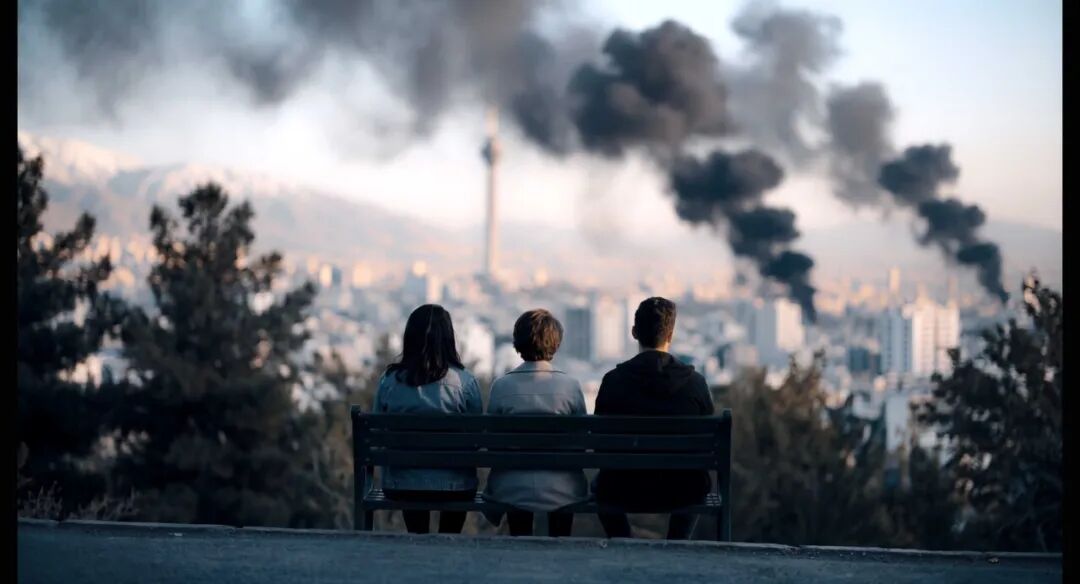
Dreams of Violets tells a story that is dangerous and impossible to film in real life. AI is not replacing reality; after reality has been blocked, it is trying to find a detour to preserve something.
It is more like a reminder that we should distinguish between two kinds of AI imagery:
One kind cuts out people where there is no need to.
The other tries to find a way through where reality is truly unreachable.
The first gives us reason to be wary. The second leaves us conflicted.
Dreams of Violets brings cinema’s oldest question back to us: Why should images be believed?
We used to trust images because they had really happened.
From now on, we may need to ask more precise questions: Is anyone accountable for them? Do they carry the weight of reality? Is there a reason for them beyond showing off?
From this point on, “AI-generated” should not automatically be a death sentence, or a free pass. We should look at what the tool has removed and what it has finally made possible.
A real film has never been just images.