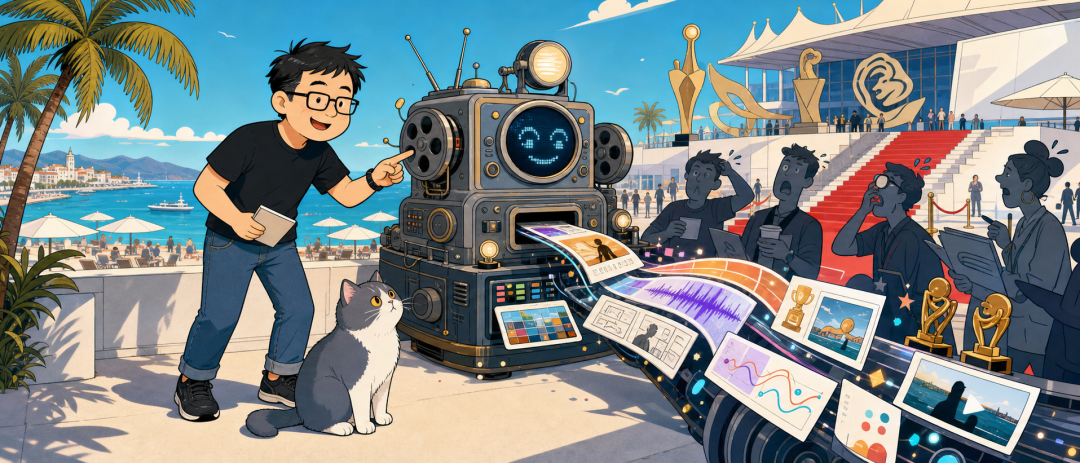
The Cannes Lions International Festival of Creativity has not officially opened yet, but the advertising industry has already tossed itself into an AI blender.
In the past, when people said Cannes Lions, it was easy to picture a polished scene: sunshine, beaches, parties, trophies, creative directors in linen shirts talking about “human insight” beside the Mediterranean. Of course it is a business, but it comes wrapped in a layer of artistic sugar. Everyone quietly believes that the advertising industry’s most expensive thing is inspiration and its hardest thing to replace is creativity.
This year, that sugary coating is starting to melt.
Several pieces of news are interesting together: ADWEEK, Code and Theory, and ElevenLabs will run an AI radio station during Cannes Lions, generating real-time audio broadcasts from articles; the festival’s public program has OpenAI, Deloitte Digital, Kantar and others discussing agentic AI, the content lifecycle, creative effectiveness and brand growth; YouTube has also used Google AI to analyze popular ads and publish its annual advertising rankings.
In other words, AI no longer just helps advertisers write copy, create images and edit videos.
It is starting to broadcast the advertising industry, organize it and even judge it.
That is a little subtle.
Creative people used to fear clients saying, “My wife doesn’t like it.” Later, they feared platforms saying, “The data is bad.” Now a model has taken the seat beside them: polite, calm and tireless. It watches thousands of ads and tells you that this one does not have enough emotional intensity, that shot may retain viewers longer, or this narrative structure is more likely to win.
It may not understand people, but it understands patterns very well.
The advertising industry has always loved talking about “human insight.” The phrase makes insight sound like a line that suddenly lights up in a bar late at night, or a creative director slapping the table and saying, “I’ve got it.” But once a machine can break thousands of ads down into color, pacing, characters, sound, conversion rates and time spent watching, what we call insight starts to be chopped into little pieces and marinated in a spreadsheet.
Marinate it long enough, and everything starts to taste the same.
That is what is most worth worrying about in AI’s reshaping of the advertising industry. It is not that it will make a lot of bad ads. There are already plenty of those; AI will just help them multiply with better organization. The real problem is that it could make “effective advertising” look more and more alike.
Everyone wants to win, and the model will tell you what is most likely to win. So brands begin to look alike, the pacing looks alike, the copy looks alike, and even “breaking the mold” starts to look like a formula. Eventually, we will have countless optimized ads with decent click-through and conversion rates that no one remembers.
It is like a table of food where every dish has precisely controlled salt, fat and calories. When you finish, all you remember is that you ate healthily—not which bite tasted good.
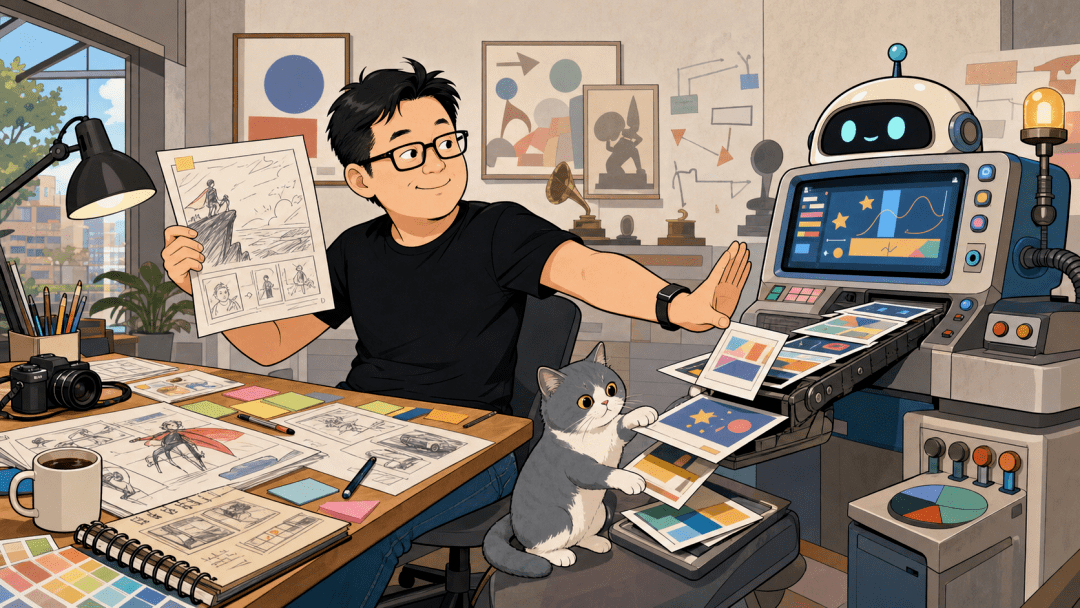
Of course, AI is not the villain. Its value to the advertising industry is real. A brand might once have needed to create materials, localized copy, social-media cutdowns and A/B tests for dozens of markets through a workflow as long as a wet towel. Now a model can compress much of that repetitive labor, letting a small team produce at a scale once available only to large companies.
AI is a good tool.
The question is, where does the person step back to?
If people only write the brief, wait for the model to spit out concepts, then choose the one that “looks okay” from ten options, creative people will slowly turn into reviewers—and the kind who often work overtime. If people can still decide what is worth saying, what should not be said, what may not look good in the data but has dignity, and what is risky but might become part of a brand’s memory, then creativity still has human warmth.
Cannes used to reward work. Increasingly, it seems to be asking an old question:
What is creativity, after all?
If creativity is simply generating content, AI has already entered the room, wearing an employee badge and holding a coffee cup.
If creativity means understanding people’s vanity, loneliness, desire, shame and humor, then expressing it in a way that is so precise it is almost offensive, humans cannot leave yet.
Machines can make advertising faster, more accurate and more abundant.
People should still make sure it does not become too boring.