A 20-year-old filmmaker has kicked down Hollywood’s old gates with a horror movie that grew out of a YouTube series.
Directed by Kane Parsons, Backrooms cost about $10 million and took in $118 million worldwide in its first three days—more than 800 million yuan. The number is already frightening on its own. It looks even more striking beside another release in the same window: Disney’s Star Wars film The Mandalorian and Grogu, with a production budget of about $165 million, opened to roughly $165–167 million worldwide.
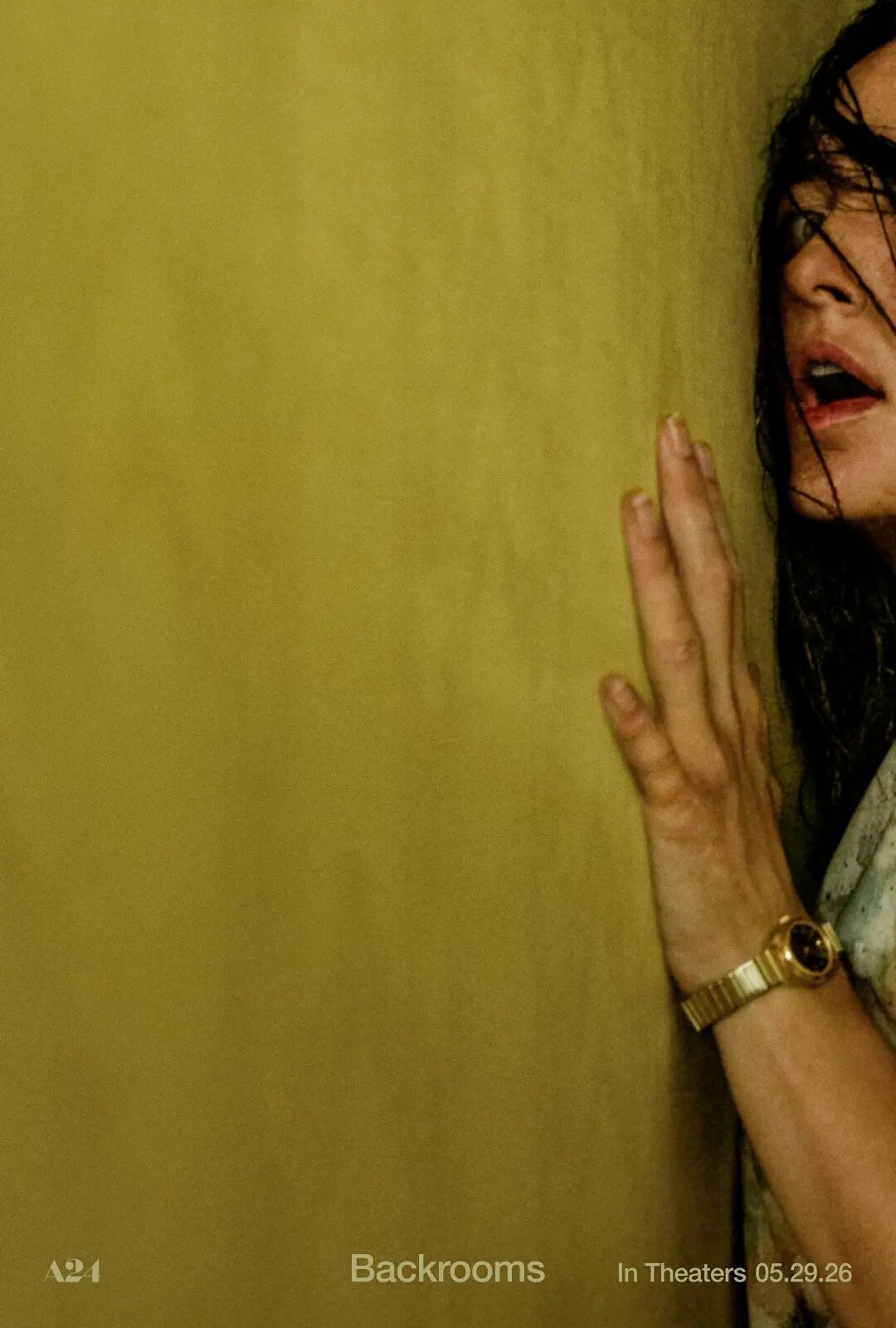
On one side, a lavish dynasty. On the other, a yellow room crawling out of an internet urban legend.
And what happened? The latter was not crushed. It made the former look a little tired.
Calling this “a young director’s comeback” or “an influencer success story” is too shallow. What really matters is that the film industry is embracing something it once did not consider legitimate: it has no stars, no major IP and is not adapted from classic literature, yet it carries a fear that grew naturally out of forums, YouTube, game maps and fan-made communities.
The idea behind Backrooms is simple, even crude: if you accidentally “noclip” out of the real world, you fall into an endless yellow space. Old carpet, fluorescent lights, empty offices, no windows and no exits. It is nothing like the conventional haunted houses, slashers or cursed families of traditional horror. It is more like a dream a generation shared in front of a screen: reality suddenly drops frames, the world splits open like a video-game bug, and you are thrown into some unmaintained back end.

It is a new kind of fear.
The horror of the previous generation often came from family trauma, religious taboos or bodily violence. Internet horror for this generation feels as if it comes from space itself: empty shopping malls, identical corridors, unattended livestreams, pages that never finish loading. The scariest thing is not a monster chasing you, but the sudden disappearance of the rules.
Put simply, it is a feeling Gen Z knows well. Life feels less like a linear plot than an interface that keeps refreshing and jumping around, ready to crash at any moment. You think you are in reality; the next second, you have been shoved into a folder with no exit.
What Kane Parsons really did well was not to stop at “finding a meme.” The internet has no shortage of memes. One blows up today, then gets chewed to tastelessness in brand posters and voice-overs for short videos tomorrow. The hard part is turning a meme into a world.
In 2022, at 16, Kane uploaded the first The Backrooms (Found Footage) video to YouTube. It ran for less than ten minutes. It had no orderly structure like a conventional horror film and did not rush to explain why the place was haunted. Instead, he did something else: he worked out how the camera should shake, how the space should change, where the buzzing of the fluorescent lights should come from, why the footage was left behind and why the people disappeared.
Little by little, viewers began to believe the Backrooms were a real place that had once existed and had simply happened to be caught on camera.
Later, he introduced a fictional research organization called ASYNC. Cold War experiments, government files, laboratory footage and dialogue from people in hazmat suits pushed the internet urban legend toward “pseudo-documentary hard science fiction.” That move was crucial. It turned Backrooms from “a creepy yellow room” into “a world with its own rules.”
That is where the gate starts to collapse.
Hollywood used to look for stories through a few familiar routes: novels, comics, games, movie stars and established genres. Creators who wanted a break had to go through the old process too: film school, short films, festivals, commercials, assisting on sets, building a résumé and waiting for someone in a conference room to say yes.
Kane took another route. He let the world take shape on YouTube first, inviting viewers to enter it, discuss it, make their own versions, explain it and fill in the gaps. By the time the studios looked back, the most expensive thing of all—“what the audience actually cares about”—had already been tested by the community.
Hollywood used to buy scripts. Now it seems to be buying collective imagination that has already fermented. When A24 discovered Kane, he was still in high school, applying to college while facing an offer to make a feature film. He later chose to defer college and take the project. Of course, people wondered: can a 19- or 20-year-old really control a feature-length theatrical release? Is he just a figurehead? Is someone else directing behind the scenes?
Actor Mark Duplass later spoke up for him. In essence, he said Kane was “100% in control” on set, extremely well prepared, and more composed than many directors three times his age.
The label “young genius” is easy to sell, but the more important point is that it breaks an industry myth: experience matters, but experience is not the same thing as understanding the present. Many middle-aged executives assume young people do not go to cinemas, so they stuff internet slang into a script, cast an influencer and add a layer of packaging they think looks young. Honestly, sometimes it is as awkward as a manager trying to use a meme.
Young people still go to the movies.
They just do not want to buy a ticket for something pretending to understand them.
According to ticketing data, more than 70% of Backrooms’ opening-weekend audience was under 25. That suggests Gen Z has not abandoned theaters entirely. The problem is that traditional blockbusters offer them an outdated way in. Give them an old IP already worn down by streaming, then pile on more expensive effects, a bigger universe and denser Easter eggs, and they may feel nothing.
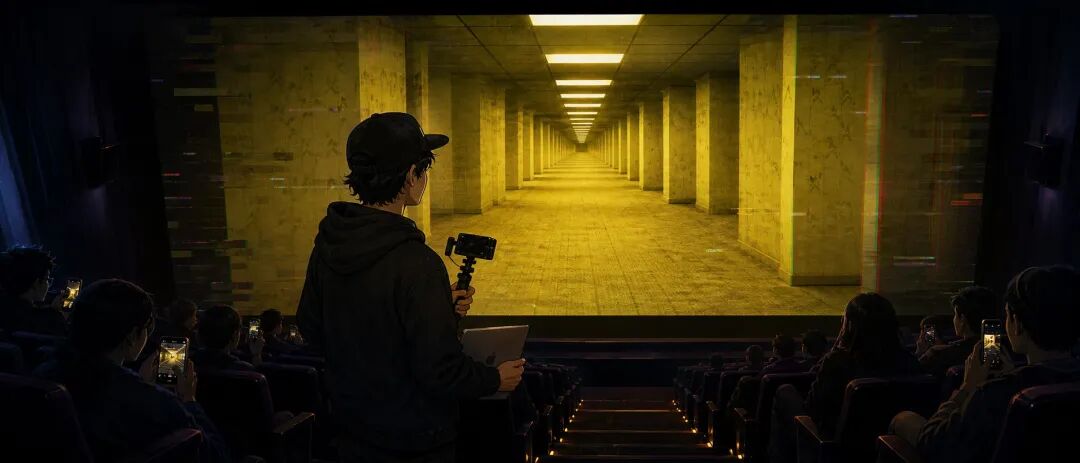
But when that familiar yellow space appears on the big screen and the cinema sound system lets out the dull electrical buzz of fluorescent lights, the experience is no longer just watching a movie. It feels more like an offline meetup for an internet community: everyone has finally gathered in the same dark room to confirm, “So you have dreamed about this awful place too.”
Of course, do not misread this as “young means winning.”
There is another point worth making. Kane’s success is not really about the surface label of being 20. What matters is that he genuinely understands the fears of that audience. The box-office success of A Letter to Grandma in China did not come from youth-oriented tricks either. It came from understanding the emotional gaps in another group of people: family, hometown, affection and regrets left unspoken.
One film looks outward at the alienation of the digital age; the other looks inward at ordinary people searching for their roots. The ages and routes are different, but the underlying logic is similar: the creators did not cater to an abstract “market.” They grasped something specific in people’s hearts.
That should worry the industry more than “big IPs are failing.”
The failure of big IPs is just the result. The real problem is that many traditional companies have lost their ability to sense what people feel. They have budgets, distribution, marketing and packed calendars in conference rooms, but they do not know what young people fear, what moves them or what annoys them. Worse still, they think they do.
The spread of AI and creative tools will continue this trend. Of course, take claims like “anyone can make a theatrical film” with a grain of salt—there is no need to be so grandiose. Capital, distribution and industrial collaboration remain hard barriers. But creators are now far better equipped than before to test a world, gather an early audience and use low-cost tools to build a visual prototype.
In the past, you had to wait for a studio to approve an idea. Now you can put it online first and let the audience vote—not just by clicking a like, but by making fan works, discussing it, researching it, imitating it, and eventually buying a ticket.
The barriers have not disappeared.
The most important gate has simply moved.
It is no longer only in a production company’s office, a film school or a festival. It may open in a ten-minute video uploaded by a 16-year-old, in an ugly picture of a yellow room, or in a late-night thread where people discuss what would happen if reality glitched you out of the map.
What Hollywood should worry about most is not just another 20-year-old genius director showing up.
The bigger problem is that the next film capable of setting cinemas alight may already have been fermenting somewhere for a long time. The people sitting in conference rooms just have not come across it yet.
I write about culture, AI and going global. If you found this interesting, please like, share and save. Thanks for reading. See you next time!