Wired audio will not die; long live the noise!
Last night, while we were having drinks at Jiuwéi, my friend Lao Pei pulled out a pair of wired earphones and asked everyone to give them a listen.
The brand was Moondrop. They looked pretty retro, like headphones from an ’80s Walkman. The sound was nothing special in the high frequencies, but for less than 100 yuan, what is there to complain about?
We took turns trying them, and somehow ended up talking about them for quite a while.

I actually carry wired headphones when I go out, and I bring two pairs: one with USB-C to connect to my phone, and one with a 3.5 mm plug for my computer. That is on top of the two pairs of Bluetooth headphones I already have: AirPods Pro and a clip-on air-conduction pair.
I carry wired ones because I am afraid of running out of battery, not because of the sound quality.
If you look around, you will find that young people use wired earphones for all sorts of reasons.
Some like the retro look. The cable control hanging around their neck is cheaper than any accessory. Some are genuine audiophiles who know that wired earphones beat Bluetooth at the same price. The laws of physics do not lie.
And then there are people who say: with the cable plugged in, it just feels more reassuring.
That is an interesting way to put it.
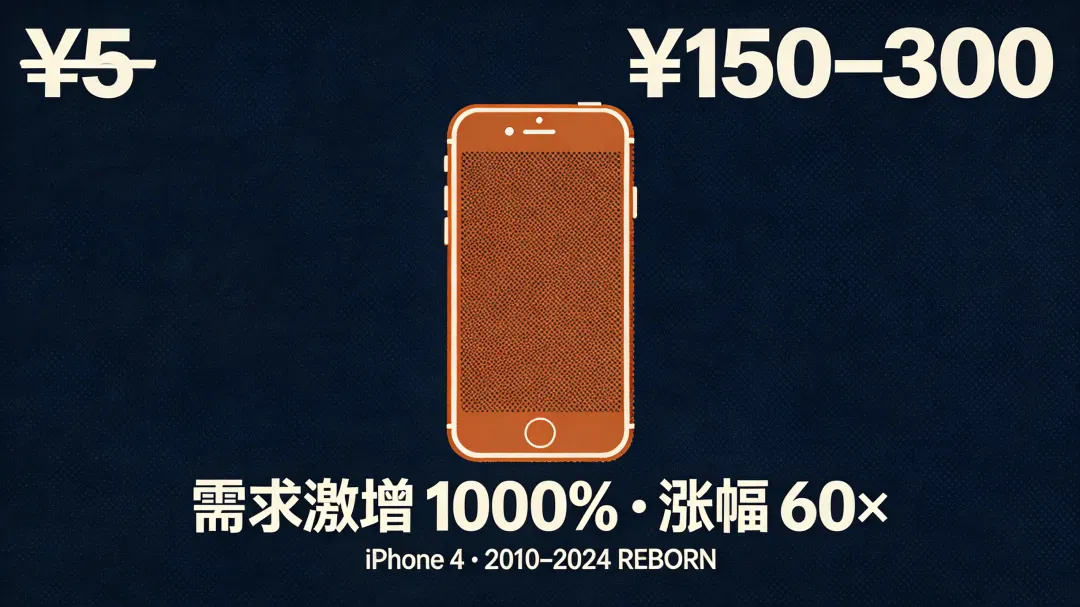
Early this year, a story made the rounds: an iPhone 4 released in 2010, previously worth just 5 yuan as scrap, suddenly saw demand surge by nearly 1,000%. Its second-hand price rose to between 150 and 300 yuan—sixty times higher—for a phone that cannot even install WeChat or recognize 4G.
Why buy one? Many people gave a surprisingly direct answer: they liked the terrible pictures it took. Natural noise, strong contrast, something like an old film—an effect that cannot be perfectly recreated with a filter.
In other words, they were paying to buy a camera that takes “bad” pictures, just as people buy CCD cameras for the same reason.
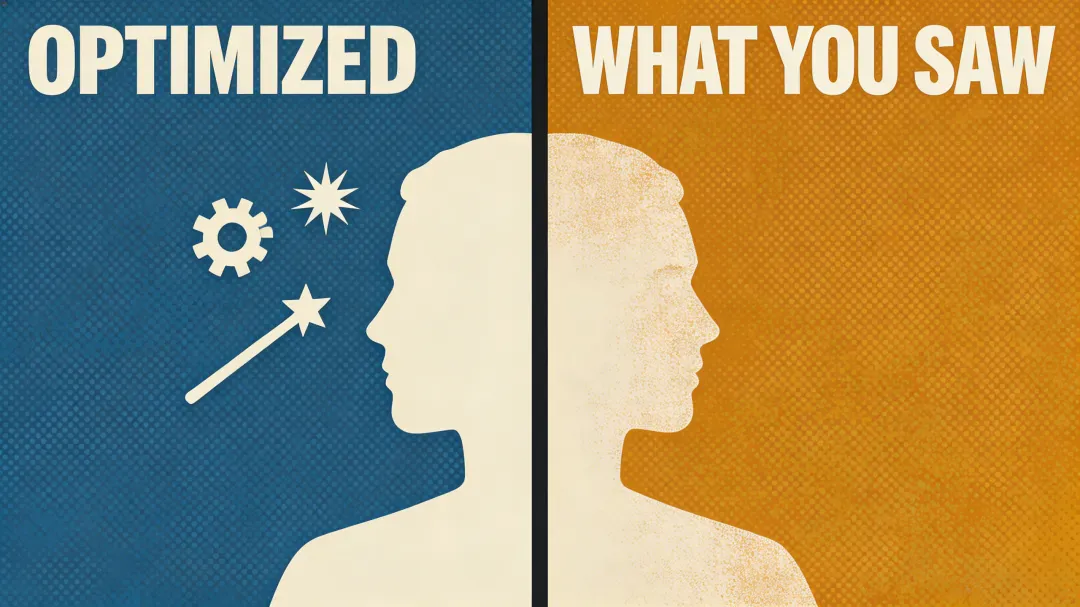
Flagship phones now rely on computational photography. If the sky is not blue enough, the algorithm makes it bluer. If your skin has blemishes, the algorithm smooths them over. If the night is too dark, the algorithm adds light. The final image is what the algorithm thinks you “should” see, which may not be what you actually saw at the time.
That sounds great. But after a while, it can feel strange—not like I took the picture, but like the machine made a decision for me.
The iPhone 4’s five-megapixel camera becomes a kind of resistance here: I do not want you to optimize this for me. I want the picture to look like what my eyes actually saw, even if it is blurry, even if it has noise.
Active noise cancellation in Bluetooth headphones is also a kind of optimization. It decides which sounds you should hear and which ones to remove. Plug in a wired pair and accept all the hassles that come with it—a short range of movement, tangles, not being able to use them while charging—and you also accept a more direct, unprocessed listening experience.
Some people put an iPhone 4 in a wooden frame and turn it into a desk clock. Others use it specifically to take pictures, seeking an image untouched by computational photography.
Turning a phone that is completely offline into a clock is not something you do because you are poor or do not understand technology. Quite the opposite: it is a choice you make after fully understanding the machine’s limitations.
For the past decade or so, we have assumed that technology progresses toward greater convenience, less friction and more automation.
But now a group of young people is moving in the opposite direction. They are deliberately creating a little friction for themselves in exchange for a feeling of being truly present.
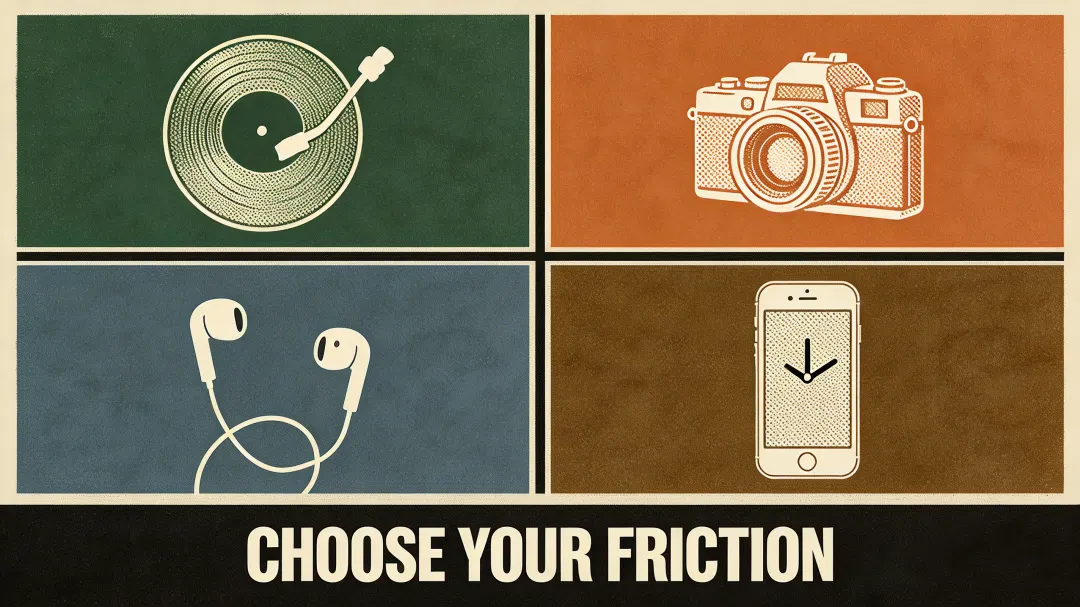
The revival of vinyl records is one example. Film cameras are another. Wired earphones are another. The iPhone 4 is another.
When I help a few brands going global with their content strategies, I am often asked: why are global consumers increasingly hard to move with “high-definition product photos”?
I have a clearer answer now.
When computational photography powered by AI lets everyone take “perfect” product shots, and every brand’s visual identity starts to follow the same algorithmic aesthetic, authenticity becomes a scarce asset.
The noise in an iPhone 4 photo and the cable on a pair of wired earphones both use a perceptible “flaw” to tell the audience: this is real, this has not been optimized, this has warmth.
For people running brands that are expanding overseas, this is an insight worth thinking about. A moat is sometimes not about eliminating friction, but making friction meaningful.
Real brand authenticity is often hidden in the “imperfections” that we deliberately choose to keep.
Sometimes all you need is a little certainty:
Plug it in, get sound, and do not worry about the battery. That is all.